How Did We Come To Consider Corporations to Be Natural Persons? – What To Do Next?

This week’s decision by the US Supreme Court to allow corporations, including unions, to hold full rights to free speech and political action under the First Amendment to the Constitution once again reminds me of the strange practical and ethical relationship we have with corporations. In the 1886 ruling, Santa Clara County v. Southern Pacific Railroad Company1, the court reporter wrote in a summary: “The court does not wish to hear argument on the question whether the provision in the Fourteenth Amendment to the Constitution, which forbids a State to deny to any person within its jurisdiction the equal protection of the laws, applies to these corporations. We are all of the opinion that it does.”  I have not read very much at all about the history of how corporations came to be persons and I will not enter into the disputes about how this came to be. It is clearly a well established fact in our laws that corporations are people.

With this new policy handed down by the Supreme Court,  corporations can now spend unlimited amounts of money carrying out political activities. The are many troubling aspects of this situation.  Besides the obvious fact that an artificial socio-economic artifact like a corporation can not possibly be a natural person, there are numerous features of corporations that make them particularly dangerous to us human beings. Corporations never die, excepting the rare death by dissolution. Corporations act globally with many agents in place to carry out policies that favor the corporation wherever and whenever required. Through the wonders of contracts and financialization of assets corporations can appear and disappear from any locality at will. One can observe an example of this phenomenon several years ago when corporations like Tyco International moved its headquarters to an off-shore island to avoid US corporate taxes. This, despite the fact that Tyco had dozens of manufacturing facilities and other operations employing thousands here in the US.

Corporations control far more assets than even the richest of individuals, even whole countries (see the chart below). This means that they have the financial assets to buy anything and anyone they wish. Despite even the protestations of Barney Frank, one of our funniest Congressmen, whose seat is a safe one, it is simply not plausible that he can receive the enormous piles of cash from the financial services industry without him becoming beholden to them. Money is too universally corrosive to support his delusions.

Just to place the power of corporations in an appropriate global context here is some information from a report from the Institute for Policy Studies in 2000:

Of the 100 largest economies in the world, 51 are corporations; only 49 are countries (based on a comparison of corporate sales and country GDPs) (See Table 2). To put this in perspective, General Motors is now bigger than Denmark; DaimlerChrysler is bigger than Poland; Royal Dutch/Shell is bigger than Venezuela; IBM is bigger than Singapore; and Sony is bigger than Pakistan.

Table 2 referenced in this quote is below:2

Top 100 Economies in 1999 - Institute for Policy Studies

What might we do to put corporations in a more suitable position in our society and the world in general?

Perhaps we need to follow the same path that those who brought the suit Citizens United v. Federal Election Committee that resulted in the Supreme Court’s ruling. After all, I do not need to pick up the constitution anew to be sure that the word corporation nor business appears in the first amendment. In fact given the position of organizations like corporations during the Founding Father’s discussions leading to the Constitution I am sure that they would never have thought or written approvingly about corporations as natural persons. On the surface then, all we have to do is find an appropriate situation that can bring such an argument before the fundamentalists (literalists, if you like) on the court and it would seem that they would have a hard time justifying even 124 years of precedent. Where are our windmill tilters for this challenge?

  1. see the Wikipedia article on this []
  2. Source: Top 200: The Rise of Corporate Global Power by Sarah Anderson and John Cavanagh, Institute for Policy Studies December 4th, 2000. If you can find more recent data please send it along to me. Despite this being a decade old, I feel quite certain that the concentration of wealth in corporate hands has only increased, though some of the players have changed. []

Remarks on President Obama’s Speech on Accepting The Nobel Peace Prize in Oslo 12/10/2009

President Obama’s speech on accepting the Nobel Peace Prize on December 10, 2009 has generally been reviewed in the US with much glow about its rhetorical heights and appreciation of its depth of thought. I did not watch Obama give this speech. Instead, I turned to the text which I could read at my leisure and without the speechifying fireworks that Obama has clearly mastered.

Although I seem stuck in a reflexive backward glance towards the eight disastrous years of Bush II whenever I evaluate Obama. I am still amazed at the enormous moral and practical abyss we fell through in those years. Obama brushing his teeth in the morning is reassuring in contrast. Nevertheless,  it is worth looking a bit more closely at what Obama did and did not say here. Much has been said of his straight forward assertion that violence is necessary and even useful in a world inhabited by human beings who seem almost genetically predisposed to killing each other off. And, with the invocation of Martin Luther King and the discussion of just war theory, he covers well worn territory, though it is cheering to have a sitting US President talk in this fashion.

There is much to applaud in Obama’s speech: control of nuclear weapons, assertion of human and civil rights, multilaterialism in conflict resolution and enforcement, denial of religion as a justification  for oppression of others.

But, we come to a significant claim, one that the US government has asserted for my entire lifetime,  and which the US media and populace would support:  “Whatever the mistakes we have made, the plain fact is this: the United States of America has helped underwrite global security for more than six decades with the blood of our citizens and the strength of our arms.” And, Obama continues with the summary moral claim that underlies this assertion, “We have borne this burden not because we seek to impose our will. We have done so out of enlightened self-interest – because we seek a better future for our children and grandchildren, and we believe that their lives will be better if other peoples’ children and grandchildren can live in freedom and prosperity.” Continue reading

Yottabytes and the National Security State

The current New York Review of Books has an article by James Bamford, “Who’s in Big Brother’s Database” that reviews the new book by Mathew M. Aid, The Secret Sentry: The Untold History of the National Security Agency . I have gotten in line at my local library to read this book and will make further comments after that.
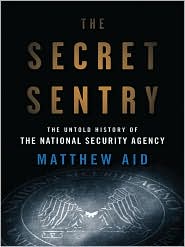
Meanwhile, the Bamford article mentions the construction boom at NSA (National Security Agency) with a doubling of its headquarters and million sq. feet of data storage in the Utah desert costing some $2 billion. This to store the data from all of NSA’s spying that by 2015 will be spoken of in terms of yottabytes.

Now, before you think that Bamford is mainlining old Star Wars characters, a yotta- is the largest large number prefix officially recognized in the scientific lexicon. At our house we are approaching 1/2 Terabyte (1012) in our total digital stores, mostly photos. Really large corporate databases are measured in Petabytes (1015). A Yotta is 1024.

Are you feeling safer?

Do you really think that any email sent or telephone conversation you have had since 2002 or 2003 is not logged in the vast secret Security State Apparatus??

I guess that a National Security State (Empire) that has had over 800 military bases throughout the world (see an earlier posting on this topic) to assure our influence elsewhere can not resist the opportunity the state of so-called war we have been in since 2001 to penetrate into every American’s life.


More Blather about Healthcare from “Experts”

Acknowledge the basic facts about how the healthcare system is working today.

Yesterday in a radio interview, “How to conquer health care challenges”, with Professor Glenn Melnick  from the Rand Corporation and USC, we were again offered up “expert” opinion that does not even acknowledge the basic facts about how the healthcare system is working today.

Here are a couple of examples from the interview lead by Kai Ryssdal:

“RYSSDAL: Well, let me make sure I understand that. If doctors and hospitals are making less money, what is that do for the quality of care? I’m just trying to think about the argument that’s going to come up on Capitol Hill on this one.

MELNICK: Quality will have to suffer in some way. Whether it’s through reduced access, whether it’s through slower development of new technology…….”

The US spends nearly 50% more on healthcare than the next closest country (Switzerland) and more than twice most developed nations. Yet our basic outcomes of infant mortality and longevity remain at near third world performance. These are the facts of our situation. Money is not the problem. It is what we spend our money on that is the problem. To say that quality will inevitably decline as a result of spending less money is just nonsense. This flies in the face of the facts of the performance of all of the developed countries in the world, except us.

Within the current US performance there are clear demonstrations of how superior performance is not driven by spending more money

Even within the current US performance there are clear demonstrations of how superior performance is not driven by spending more money. Just read “THE COST CONUNDRUM: What a Texas town can teach us about health care.“ by Atul Gawande in the New Yorker. Here is part of Gwande’s discussion of this point:

Americans like to believe that, with most things, more is better. But research suggests that where medicine is concerned it may actually be worse. For example, Rochester, Minnesota, where the Mayo Clinic dominates the scene, has fantastically high levels of technological capability and quality, but its Medicare spending is in the lowest fifteen per cent of the country—$6,688 per enrollee in 2006, which is eight thousand dollars less than the figure for McAllen. Two economists working at Dartmouth, Katherine Baicker and Amitabh Chandra, found that the more money Medicare spent per person in a given state the lower that state’s quality ranking tended to be. In fact, the four states with the highest levels of spending—Louisiana, Texas, California, and Florida—were near the bottom of the national rankings on the quality of patient care.

Melnick is not done demonstrating his lack of awareness of further basics about how healthcare works in the US.

There are a number of economists who feel that health-care is expensive for good reason. And the reason is that it’s valuable. That new innovation and new technology, while it may add to the cost of the health-care system, also brings with it tremendous benefits. The real challenge is can we develop a system to do the research to identify those things that are going to be high value in the first place, and to screen out those things that are low value and not adopt them as quickly as we have in the past. And that will be a challenge, but I think there’s potential savings there. I don’t know any country that has done it very well so far, because new innovation is just so complex and hard to predict.

One of the well reported facts about “innovation” in American medicine is that there is no requirement for new technologies, new procedures, new medical devices, or even new drugs to prove their efficacy. This is well known and examples of the consequences are abundant. If we only knew which of all these “innovations” really provided improvements in healthcare outcomes we would all be better of and probably at a lower cost.

I am not sure who Professor Melnick is, but, based on his performance during this interview, he would appear to be another example of that alternative text for PhD.


Michael Crichton’s Congo and the Transformation of the Western Mind

Book Review/Essay  2/97

(revised 1/29/02 – maps added at bottom)

(revised 6/25/03 – map of Angola superimposed on the US)

Michael Crichton’s 1980 pulp novel Congo opens with an introduction that is truly arresting . I quote here the first two paragraphs in their entirety.


“Only prejudice, and a trick of the Mercator projection, prevents us from recognizing the enormity of the African continent.


Covering nearly twelve million square miles, Africa is almost as large as North America and Europe combined. It is nearly twice the size of South America. As we mistake its dimensions, we also mistake its essential nature: the Dark Continent is mostly hot desert and open grassy plains.

In fact, Africa is called the Dark Continent for one reason only: the vast equatorial rain forests of its central region. This is the drainage basin of the Congo River, and one-tenth of the continent is given over to it – a million and a half square miles of silent, damp, dark forest, a single uniform geographical feature nearly half the size of the continental United States. This primeval forest has stood, unchanged and unchallenged, for more than sixty million years.”

This reader was gripped by his own ignorance of the facts and yet skeptical.  He could recall all those geography lessons of grade school. He had traveled a bit. But none of this brought enough confidence to bear for these first two paragraphs in this pulp novel not to send him off to his maps, atlases, encyclopedias, even the internet.

Mercator. Yes, that is the projection so familiar from grade school. It even sticks in the mind that one of its key features is that the latitude and longitude lines are straight lines.  This is convenient for rectangular pieces of paper, but it creates great distortions of area. This rectangular display of the surface of the nearly spherical surface of the earth produces a Greenland that appears almost as large as the US. The farther away you go north or south from the equator the larger this error becomes.

So, OK this Mercator, who on investigation in the ‘97 Grolier CD Encyclopedia, turns out to be a Flemish cartographer, Gerardus Mercator (1512-1594), produced cylindrical projections of a spherical surface.  This of course lead to this readers present state of misapprehension.

Well, let’s take a closer look at this matter. A few simple comparisons of territories that he has driven across will put this into better perspective (this reader does have a bit of trouble with abstractions).

So here is a chart neatly drawn up in tabular form (again courtesy of the above referenced CD encyclopedia). The data on Africa seems to hold up Crichton’s assertions. Hopefully the American reader (obviously of the East Coast persuasion) will find some suitable reference point to investigate the data for themselves. The India entry is just for fun and effect.

Area (sq. miles)
Population
Texas
267,277
18,378,000
New England
71,929
13,239,000
New England, NY,PA,OH,IL
274,423
66,244,000
United States (continental)
3,106,231
261,429,000
Africa
11,710,500
720,000,000
Nigeria (most populous in Africa)
357,000
98,100,000
Zaire
905,567
41,200,000
South Africa
471,445
43,500,000
India
1,269,345
911,600,00
Wisconsin
65,503
5,038.000
Illinois
57,918
11,697,000
Vietnam
127,242
71,800,000

What strikes this parochial mind is that the Mercator effect is at work even in our views of the United States.

Let’s investigate this a bit.

First a couple of numbers to illustrate my thesis. Texas is 801 miles north to south and 773 miles east to west.

By contrast, think of a car trip from Boston to Chicago. The American Automobile Association preferred yellow-line triptych calls this out at 925 miles. Boston to Washington DC is approximately 600 miles. Do these numbers and our mental images on the map jive?

Let me close this bit of geography with a historical note about Vietnam. During the Vietnam War I found it useful in political discussions, during my college days in Wisconsin, to point out that Vietnam is very close to the combined land area of the states of Wisconsin and Illinois . In this area the US government dropped as much munitions as consumed during all of World War II in all theaters.


Mercator Projection (circa 1596)


Robinson Projection(most widely used by National Geographic and others during the 20th centuryh until 1980′s)


Both maps borrowed without permission from geography.about.com

6/25/3

Yesterday I was scanning through the New York Times and saw an article, “Latest Peace Hopes Thwarted on Africa’s Battlefields” by Somini Sengupta. It was accompanied by a series of maps, including this one: (text added by me)

As for the balance of the 314 pages of this pulp novel, it’s entertaining…lots of gorillas and other beasts ………a page turner.