
Category Archives: books
7/29/2019 – exercises, puttering, HAL, nonfiction book group
Monday
After breakfast did exercise routine. Puttering. Created some questions for the book group meeting on White Trash. Karen was off in Cambridge at Soup Group. Greeted one of the 50 photographers in the gallery to see her work. Read more of Stalingrad.

Broke up the many computer boxes I had brought down from the 2nd floor of barn. First step in a clean out.
Met with Emily Chameides at the library at 5pm. Talked through lots of issues.
Nonfiction book group at 6 pm. 8 people attended despite promises from four or five more to show up. Two new people: Anna Maria Assevero and Peter Daley. She has joined the library board. He is a friend of Erika and Nick from another book group. Good discussion.

Why Are There 16 Producers on House of Cards?
 OK you Hollywood moguls and wannabes, what does a producer do? What do all of the variants do? Executive Producer, Associate Producer, Managing Producer, Supervising Producer, Co-Executive Producer?? How do they stay out of each other’s way?? How much are they paid, salary and residuals?? Should this be my next career stop??
The Internet and Demand Management (Advertising)
My friend Joe Keenan recently sent me an article by Vicki Boykis, “Fix the internet by writing good stuff and being nice to people” from her blog Woman.Legend.Blog.
Today’s internet is mean. It’s hard to pinpoint exactly when everyone online became a jerk, but to me it seems that the tipping point occurred right when making money off content started being worth more than the content itself.
Ms. Boykis devotes a lot of attention to the fate of the internet to be just another platform for grabbing our attention to deliver advertising messages.
Of course, since the election, many people, including myself, have finally internalized that Facebook is a burning dumpster fire of memes and political messages that physically exhaust everyone and cause social anxiety, to the point of directly influencing our political process. But, we’re so wired to check for positive reinforcement that we can’t tear ourselves away.
Which brings me to the saddest thing about these platforms: they are taking all of our input and time, and our thoughts, energy, and content, and using all of that for free to make money. Think about how many times you’ve tweeted. Or written or commented on a Facebook post. Or started a Medium draft. These are all our words, locked in proprietary platforms that controls not only how our message is displayed, but how we write it, and even more worrying, how we think about it.
None of this is new. It is all a predictable extension of the gigantic advertising industry that began its dominance of our culture and our visual landscape in the first decades of the 20th century. It gained strength and penetration into our lives with each communications revolution, radio, TV, now the internet. The internet brings such a granularity of messaging that if you do a few searches in Google for information about Iceland while in Hudson NY you will quickly see advertising pitches for hotels in Iceland appear all around you.
Since we have all grown up in the same corporate fish tank it is hard for us to recognize how complete the reach and scope of the demand management industry is. (Advertising executives referred to their industry with this term back in the 1920s – some economists have continued – see J.K. Galbraith New Industrial State 1978 for example)
Here are a few numbers about global spending on demand management. In 2016 all paid media spending was by region: North America: $202 billion (5.9% of world population), Asia-Pacific: $171 billion (59% world population), Europe: $98 billion (4% of world population) ROW: $90 billion. ((https://www.emarketer.com/Article/Worldwide-Ad-Spending-Growth-Revised-Downward/1013858)) So you can see how intensive the bombardment is here.
This intense focus on demand management is reflected in the amount of retail space there is here compared to other developed countries.
Since 1995, the number of shopping centers in the U.S. has grown by more than 23% and GLA (total gross leasable area) by almost 30%, while the population has grown by less than 14%. Currently there is close to 25 square feet of retail space per capita (roughly 50 square feet, if small shopping centers and independent retailers are added). In contrast, Europe has about 2.5 square feet per capita.
…….The primary and underlying reason for this condition, and why it will continue ad infinitum, is that growth expectations/demands of shareholders, independent owners and Wall Street are higher than the growth of the real economy. And this has been the case for at least the last 25 years ((https://www.forbes.com/sites/robinlewis/2015/03/17/retail-in-2015-a-reality-check/#517594ca27ef))
I point out these facts to suggest that our troubles with advertising on the internet fits into the long-term strategy of capitalists to grab our attention and shove their messages down our throats with ever increasing intensity. This is not new, we are just in a new technically more sophisticated era.
One idea about controlling advertising might be to require the facts and claims mentioned in advertising to in fact be verifiable. We are all intensely upset over our new age on non-fact, counter-fact, alternative-fact politics. Yet, for decades we have allowed advertisers to lie and cheat without bounds in their promotions. An effective enforcement of the Truth in Advertising Law would be a start.But that would require a government controlled by the people not the corporations and rich.
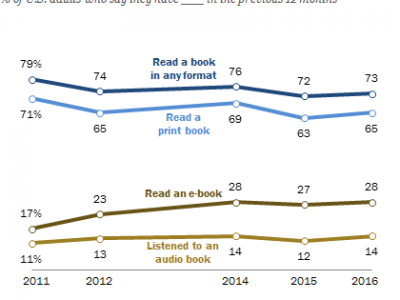
E-Books Flatline; Books (Paper) Return Like Zombies
As the Web was becoming ubiquitous in the early haze of the 21st century the wonders of Google search displaced Altavista and other engines in the search wars. Web wags declared that the age of books, actually all paper-based media, to be over. The Web would quickly provide universal access to all of human knowledge on your computer. This even before the iPhone and Android brought the Internet to our hand and thumbs. Amazon and Apple launched their tablet reading devices, Kindle and iPad. Others followed. The numbers are truly amazing. Over 2 billion tablet computers were sold between 2010 and today. The sale of e-books rose enormously.
On the way to the funeral books proved to be the zombies of the paper media world. Newspapers and magazines have continued to decline. Continue reading
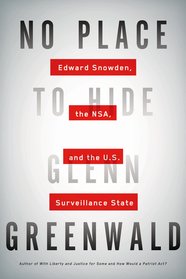
No Place to Hide by Glenn Greenwald – book review
 We are within days of the anniversary of the first revelations from Edward Snowden’s archive of NSA documents. The drum beat of new stories emerging from this trove continues even to this moment. ((NSA Collecting Millions of Faces from Web Images http://www.nytimes.com/2014/06/01/us/nsa-collecting-millions-of-faces-from-web-images.html accessed 06012014)) So, Glenn Greenwald’s book, No Place To Hide: Edward Snowden, the NSA, and the US Surveillance State might be greeted with a yawn, what could be new?
In fact, there is much that is new about how these stories have come to light and a very good overview of what we have learned about what Greenwald calls the US Surveillance State. This is a book in two parts. The first 89 pages read like a cross between a detective thriller and a spy story. There are hand offs of thumb drives at airport boarding gates, virgin computers, cell phones sealed off from the reach of the NSA by removing batteries or stuffed in freezers, meetings with a yet to be identified Snowden by an unsolved Rubik’s cube in hand. Continue reading

Book Review – The Whisperers – private life in Stalin's Russia by Orlando Figes
Leave a reply
 This book by Orlando Figes is exciting, terribly depressing, and cautionary. Based on hundreds of in-depth interviews and thousands of letters, diaries, and government documents, Whisperers ((more here on Figes’ website)) puts real people in place of the faceless numbers that constitute our usual image of the human costs of Stalinist Russia – the 10 million lost during collectivization, the same or larger number disappeared during the various Terrors and the 20 million or more dead during the Great Patriotic War (aka WWII). For those who do not have much background in Russian and Soviet history Figes provides concise sketches of key political and economic developments covering the entire span of Soviet Russia. You will not feel at a loss during the NEP period nor the ensuing collectivization and the round ups of “kulaks”. This allows you to understand the private lives with a reasonable understanding of the context.
But the real contribution of this book is its discussion of the truly radical efforts by the Communist Party to crush the family as a basic unit of society and replace it with other institutions. The goal is to shape the new Soviet man. The coercive intrusion by the state into every aspect of daily life is comprehensive – it adds new depth to understanding the machinery of a totalitarian state.

US Vacuum Cleaning Our Privacy – the bigger story
 There has rightfully been considerable outrage over this week’s revelations that the Federal government has been sucking up information on virtually every aspect of our lives, email, telephones calls, pictures, credit card and banking transactions, and so on. Unfortunately almost all of this discussion is taking place without a useful sense of the scope, scale, and trajectory of the government’s war on terror. Continue reading
US Vacuum Cleaning Our Privacy – the bigger story
There has rightfully been considerable outrage over this week’s revelations that the Federal government has been sucking up information on virtually every aspect of our lives, email, telephones calls, pictures, credit card and banking transactions, and so on. Unfortunately almost all of this discussion is taking place without a useful sense of the scope, scale, and trajectory of the government’s war on terror. Continue reading

John le Carré on Bush's Iraq War – The United States of America Has Gone Mad
 John le Carré, author of many beloved spy novels, e.g., Tinker Tailor, Soldier, Spy, wrote this piece critiquing the then upcoming War on Iraq in January 2003. Besides pointing out the very strong connections between big oil and the Bushes, many other elements of the critique continue to be applicable to current American foreign policy.
Here it is reproduced in its entirety: Continue reading