SHAMOKIN, Pa.
IF you’re lucky, once in a lifetime you have a teacher like Jean Louise Stellfox.
For 39 years Miss Stellfox taught English at Shamokin High School here in the Appalachian coal fields. She was known for never raising her voice, and yet, says Todd Kerstetter, a former student: “When we heard her footsteps in the hall, everyone shut up. She could put you in your place in a blink of the eye.” And when the bell rang to end the period? “No one budged until Miss Stellfox said you could go,” recalled Mary Anne Stump, who had Miss Stellfox in 2000, and whose mother had Miss Stellfox in 1962.
Every student in Miss Stellfox’s class had to memorize Hamlet’s soliloquy. “She felt it was good for us,” said Mr. Kerstetter (class of ’89). For the mythology unit, they had to learn all the gods – both their Greek and Roman names. Even in her advanced senior classes, she gave a spelling test every Friday. And Miss Stellfox’s students read and read – Alexander Pope, Robert Frost, Ernest Hemingway, Edith Wharton and, most of all, her beloved Shakespeare.
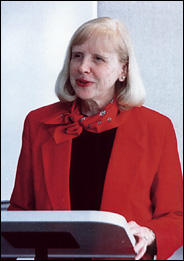
Miss Stellfox never married, and except for her four years away at Dickinson College, 90 minutes down the road in Carlisle, Pa., this was her only home. After her parents died in the early 1990’s, she lived by herself in the family’s small attached row house, which was just 12 feet wide, built by the coal company over a century ago.Still, Miss Stellfox was not alone. Her students were her family. “She didn’t teach you for a year and forget about you,” said Noreen Schwalm, who had her in 1965, was inspired by Miss Stellfox to become an English teacher herself and also became Miss Stellfox’s best friend. When Kayleen Rohrer ( class of 1992) married, she invited Miss Stellfox. When Eddie Korbich (1979) became an actor, Miss Stellfox made the four-hour drive to New York City to see him on Broadway.And so when Miss Stellfox died in 2003 at age 64 – killed crossing a street near her house by a hit-and-run driver – there was an overflow crowd at the funeral home. She was laid to rest near her parents, at Mount Carmel Cemetery, but even buried, Miss Stellfox was not done teaching.
Miss Stellfox may have lived frugally – when the estate was liquidated, her house sold for just $6,000 – but she had saved prodigiously and invested wisely.
Now, for the first time, it can be told: Miss Stellfox was worth over $1.5 million and left most of it to Dickinson College. Even close friends were stunned. “Is that right, over a million?” said Eugene Boughner, the recently retired Shamokin High principal, who worked with Miss Stellfox nearly 40 years. “Jean and I were close, but she was a very, very private person. I had no idea.” “My mouth dropped open a mile,” said Mary Ann Gray, Miss Stellfox’s closest living relative, a second cousin. As the will’s executor, it was Mrs. Gray’s job to round up the assets. “She had the money spread among three different banks,” said Mrs. Gray. “She didn’t want people to know. I was going from bank to bank, filling up a suitcase.” The only one aware of what she was up to was Mr. Kerstetter, her former student, and now a lawyer here, who had drawn up the will a year before her death. “At first she didn’t want to tell even me how much money she had,” recalled Mr. Kerstetter. “I said, ‘Miss Stellfox, how can we do this will?’ ” At Miss Stellfox’s request, Mr. Kerstetter contacted Dickinson about the planned gift. But while still alive, she insisted on anonymity. “She didn’t want to get hounded,” the lawyer said. “She didn’t want people knowing she had this kind of money. She was afraid they’d wine and dine her.” Miss Stellfox told Mr. Kerstetter that a visit by Robert Frost to Dickinson in 1959 helped her decide to become an English teacher, and that’s how she wanted her gift used – to bring renowned writers to campus. The first will be Ian McEwan, the British novelist and Booker Prize winner, who will visit Dickinson in late September, his $20,000 fee paid by the new Stellfox stipend. In death, Miss Stellfox was as exacting as she had been with her students in life. Every item in her house was accounted for in her will. Mrs. Gray got the Henkel Harris serpentine chest and the Mary Webb Wood hand-embroidered crewel wing chair. Mrs. Schwalm, her fellow English teacher, got the books and the blue La-Z-Boy. Each was also left $25,000. “She left instructions for which outfit, watch and jewelry she wanted to be buried in,” said Mrs. Schwalm. “All we had to do was pick the day and time.” She asked that Todd Hummel, a former student, play the organ at the Grace Lutheran Church service, and if he couldn’t make it, she’d listed two backup options. (He made it). BUT perhaps most precious of all her worldly possessions were two thick scrapbooks that she’d left behind titled “Memories of Teaching.” Inside were thousands of photos, cards and letters from students. Long after they’d gone out into the world, they were still worried they could not meet Miss Stellfox’s standards. “It is with some fear that I begin this letter, knowing full well that your keen eye is reading it,” Kay Shoyer Hooper wrote in 1991, 21 years after graduating. “For many years I have been working under that watchful eye, even though miles have separated us.” Aaron Golumbfskie, the 1992 valedictorian who went on to earn engineering degrees at Johns Hopkins and Berkeley, wrote: “This is the third time I’ve started a note to you, because in the last two there were outstanding grammatical errors!” Mary Anne Stump and Sarah Sodrick graduated in 2000, the year Miss Stellfox retired. By then the kids called her the Silver Fox (only behind her back, of course), and as teenagers do, they chronicled her every quirk, knew that she wore only dresses, never pants, knew that between meals she never snacked, and drank only water. In short, they were as mesmerized by her as their mothers and fathers had been in the 1960’s. “The power she had over our class,” said Ms. Sodrick, “not many people have that power.” Ms. Stump, now 23, is starting out as a teacher this fall. “I try to think of ways I could command respect like Miss Stellfox,” she said.

 This van gets 43 miles per gallon in city driving! GM actually can build efficient vehicles. How did this happen? It turns out that the Chinese government has vehicle efficiency regulations and simply requires this level of efficiency. So, if even GM can do this in China, imagine what they could do here if we had a government that was serious about improving our use of petroleum.