Tag Archives: New Yorker magazine

Tuesday – 1/17/2017

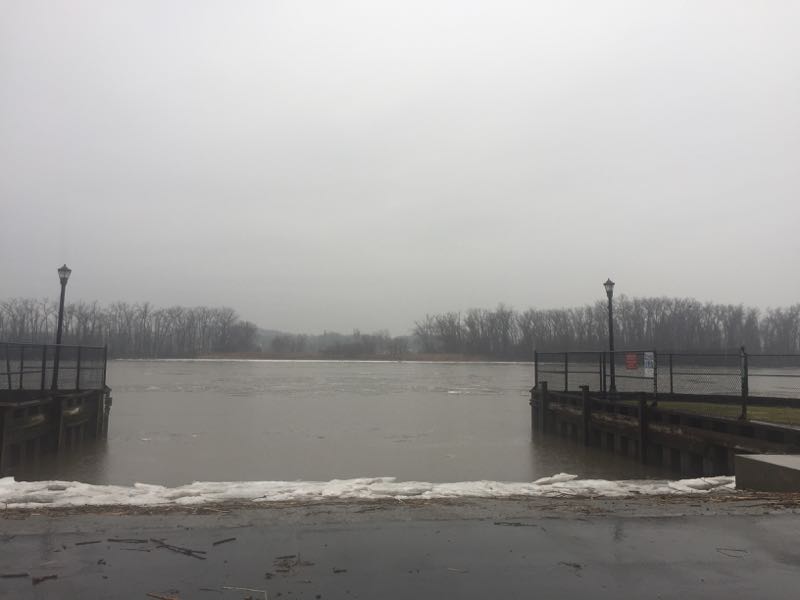
Hudson River 3:30 pm.

Waiting to hear about schedule for hydrocelectomy surgery tomorrow at Albany Med.

Nyla broke her ankle over weekend playing volleyball.

Was reading latest New Yorker. Good article about primary care medicine by Atul Gawande. Sent this email to Stanley Sagov:

Stanley,

I keep getting your invites to your jazz concerts. Hope this is going well. 

Karen and I moved to Hudson, NY 7 years ago. Small town with complex social environment. I have been intensively involved in the local library where I am sitting now. We rebuilt an old armory for a new library over 5 years. Opened last year and the place is jumping. I’ve returned to playing tennis after a 30 yr hiatus. I am really enjoying being 70 yrs old and still improving my game.
 
The weeks New Yorker and something else brought you back to mind today. Atul Gawande’s piece: 
TELL ME WHERE IT HURTS: Our medical system rewards heroic intervention. When will we grasp the power of incremental care?
 
The article Is useful for its policy points. Gawande knows how to write in an engaging fashion. A story teller.
 
But for me it also reminded me of the two or more decades during which I used to come to your office with various complaints. You generally offered up some useful medical advice and always a bad joke. You put me on blood pressure and cholesterol drugs when I was about 40 saying that this might be the most important thing you ever do for me. There were the three years in a row that I came in during early March complaining about various heart related things. You asked, “What happened in March?” – of course, my father died at age 63 without notice in early March. This lead to some useful visits with a therapist. You also suggested about the same time that my executive drive and life style might kill me. I started walking a bit after that, then that lead to running 100 yards. In short order I became a notorious entrant in 5K road races, the guy who took 38 minutes and always had the ambulance just behind him. There was the 5 mile Boston Police Chase race where within a few hundred yards of the finish line some smart aleck point out a short cut to me. After huffing and puffing for 40 minutes I should take a shortcut!!??
 
So, what has brought you to mind recently, excepting of course your concert emails? I have started to have some vertigo when lying in bed. Even some when tipping my head abruptly to the side as sometimes occurs when leaping for a ball at the net. Maybe 25 yrs ago I called you up on a Friday. Told you of similar symptoms. You listened and asked what I was doing Saturday morning. “I can cure you!” you announced without a pause. This seemed improvident for a medical professional to claim.  nevertheless,  I went in Saturday morning and you cured me. Now I need to find out if my young doctor here in Hudson knows the Epley maneuver.
 
Hope you are well and continue to enjoy tickling the ivories.
 
Mark
He replied later in the day:
Thanks for your warm communication.
Atul Gawande spent several rotations with our practice over a few years when at Harvard med school.He was always a bright student and I still enjoy his writing and thinking.
   I too am enjoying being in my 70’s still walking talking remembering stuff and doing the epley manoever.
Ps .. buy one of our cds for your library ????????????????????‍♀️????????????????‍♀️????????????????❓????????❤????????????????

6/2/2002 – Greenland and Global Warming

an essay from the original markorton.com website:

Greenland and Global Warming

When I looked down into the Grand Canyon for the first time, I paused only for a moment at its immensity and moved right onto a more self-centered thought, “How tiny human history is in all of this, and even further, how much less significant my own life must be by extension.”

It is clear that human beings will not outlast Nature.

An article in the January 7, 2002 New Yorker magazine, Ice Memory by Elizabeth Kolbert suggests that Nature will win out in even the shorter run than my earlier musings.

Greenland is about the size of France and 80% covered by ice. The ice sheet or glacier is over ten thousand feet thick. “A hundred and thirty-eight feet down, there is snow dating from the American Civil War; some twenty-five hundred feet down, snow from the days of Plato, and, five thousand three hundred and fifty feet down, from the time when prehistoric painters were decorating the caves at Lascaux. At the very bottom, there is snow that fell on Greenland before the last ice age, which began more than a hundred thousand years ago.”

Starting in 1959 and continuing sporadically to this day, teams from various countries have drilled down through this ice and extracted cores on four or more occasions. At first no one was very interested in the cores, but a clever Danish scientist developed a technique that allowed for an accurate reading of the atmospheric temperature at the time each layer was deposited. This involves the ratio of two oxygen isotopes in rain water that is temperature dependent.

So, what do these ice cores reveal about the earth’s climate?

“Its hard to look much further back in the record, however, without feeling a little queasy. About twenty thousand years ago, the Earth was still in the grip of the last ice age. During this period, called the Wisconsin by American scientists, ice sheets covered nearly a third of the world’s landmass, reaching as far south a New York City.

The transition out of the Wisconsin is preserved in great detail in the Greenland ice. What the record shows is that it was a period of intense instability. The temperature did not rise slowly , or even steadily; instead, the climate flipped several times from temperate conditions back into those of an ice age, and then back again. Around fifteen thousand years ago, Greenland abruptly warmed by sixteen degrees in fifty years or less. In one particularly traumatic episode some twelve thousand years ago, the mean temperature in Greenland shot up by fifteen degrees in a single decade.”

So, over the last hundred thousand years of climate history captured in the ice there have been dozens of episodes of wild swings in temperature. But, taking a longer view, the earth has oscillated through warm periods of ten thousand years followed by ninety thousand years of cold during the last half million years. The warm period we now live in is now ten thousand years old; a cold period should follow.

Although us humans are persisting in all sorts of un-neighborly activities, in the end, we may not have enough time to do ourselves in before Nature catches us.