
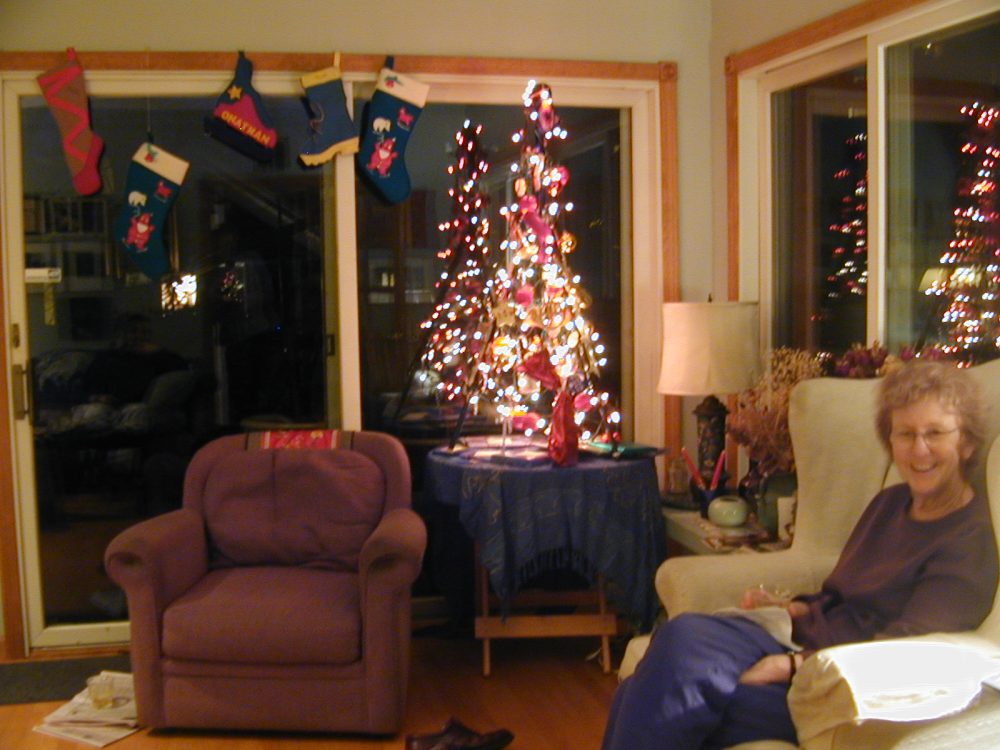
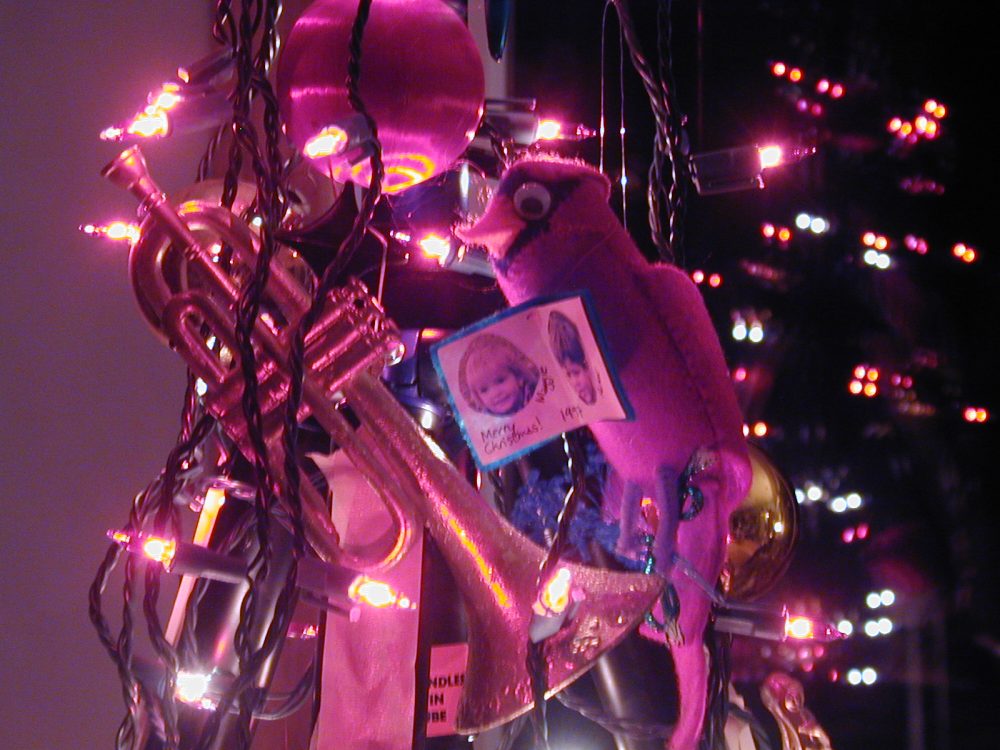
This year we used a camera tripod for the tree. 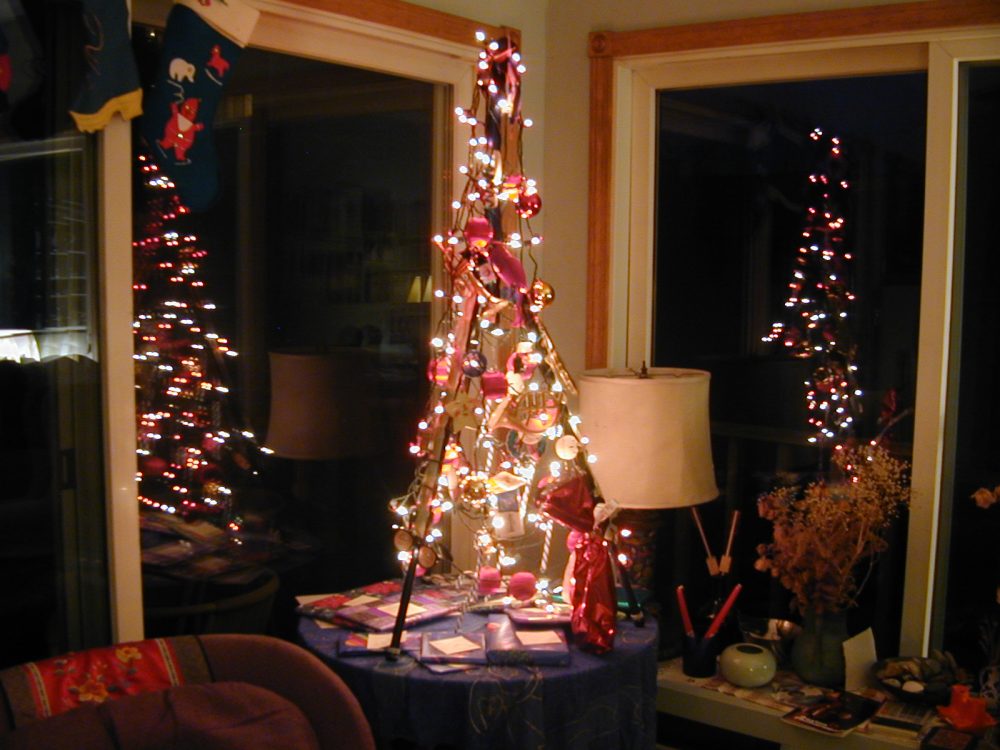
Category Archives: 2002
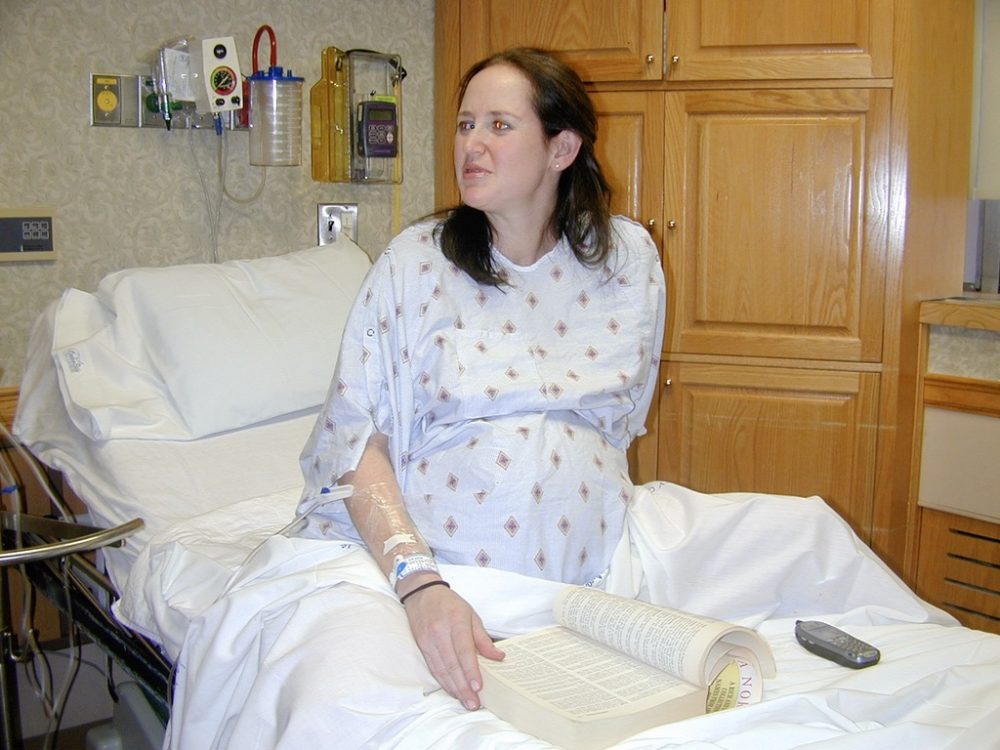
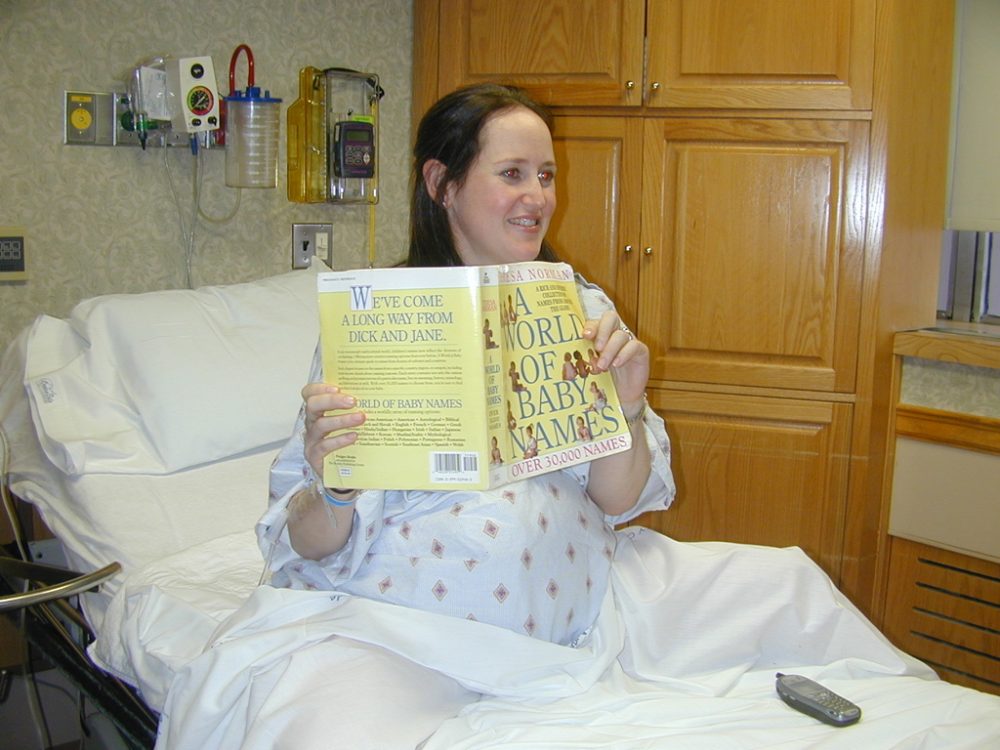
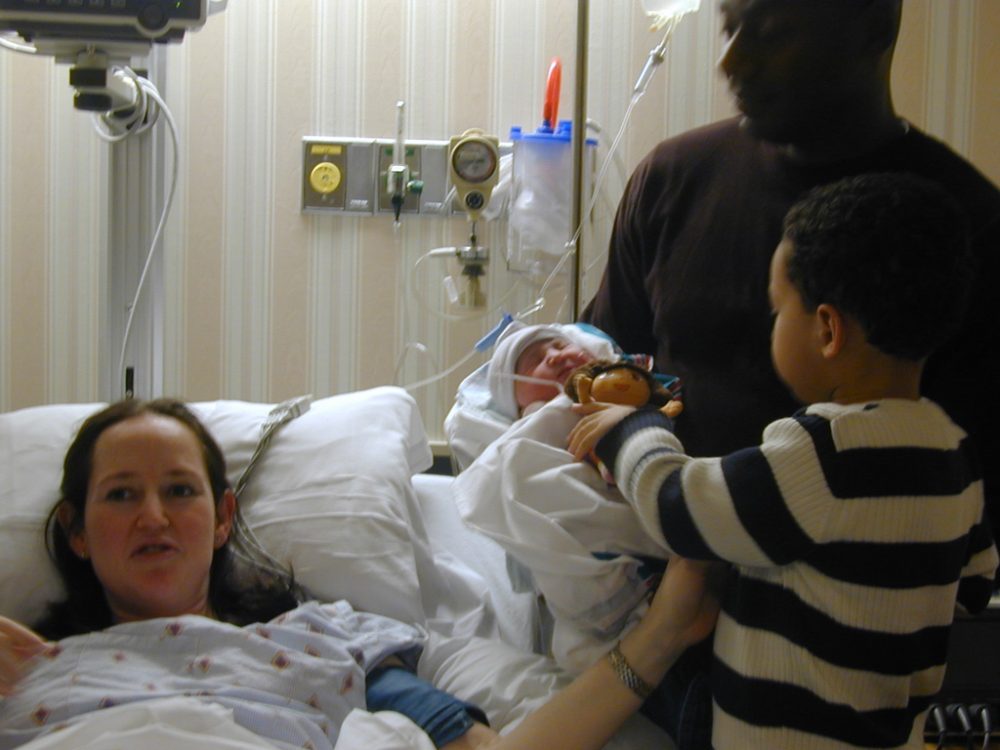
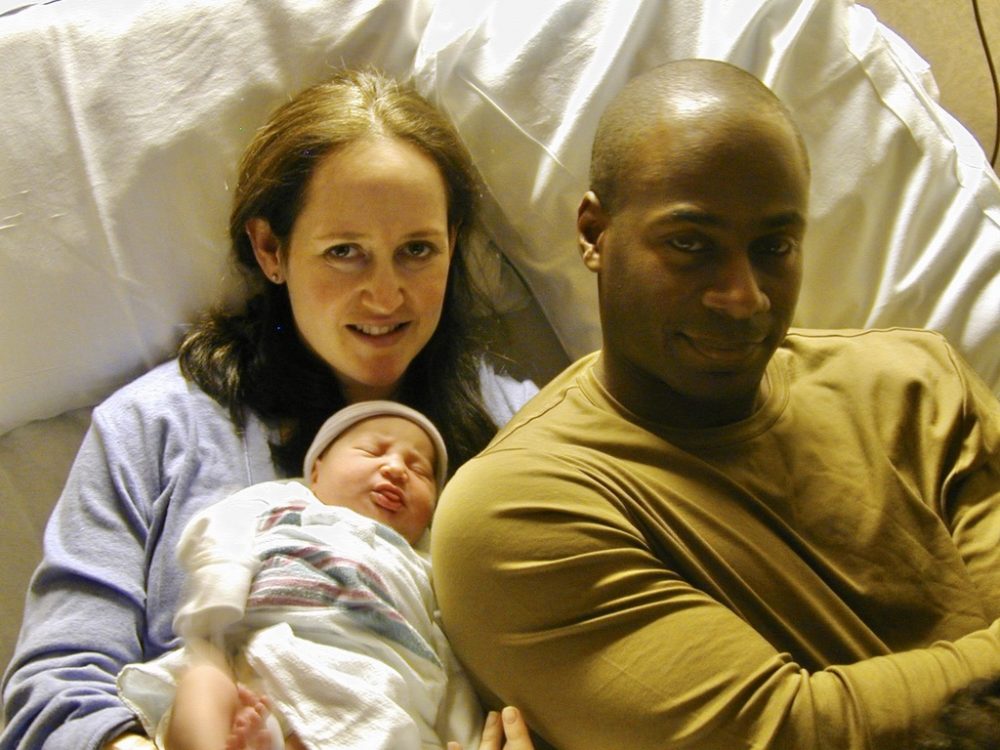
11/8/2002 – Friday – Nyla Gilstrap born…..
10/12/2002 – Saturday – 25th Wedding Anniversary Party – Mark and Karen
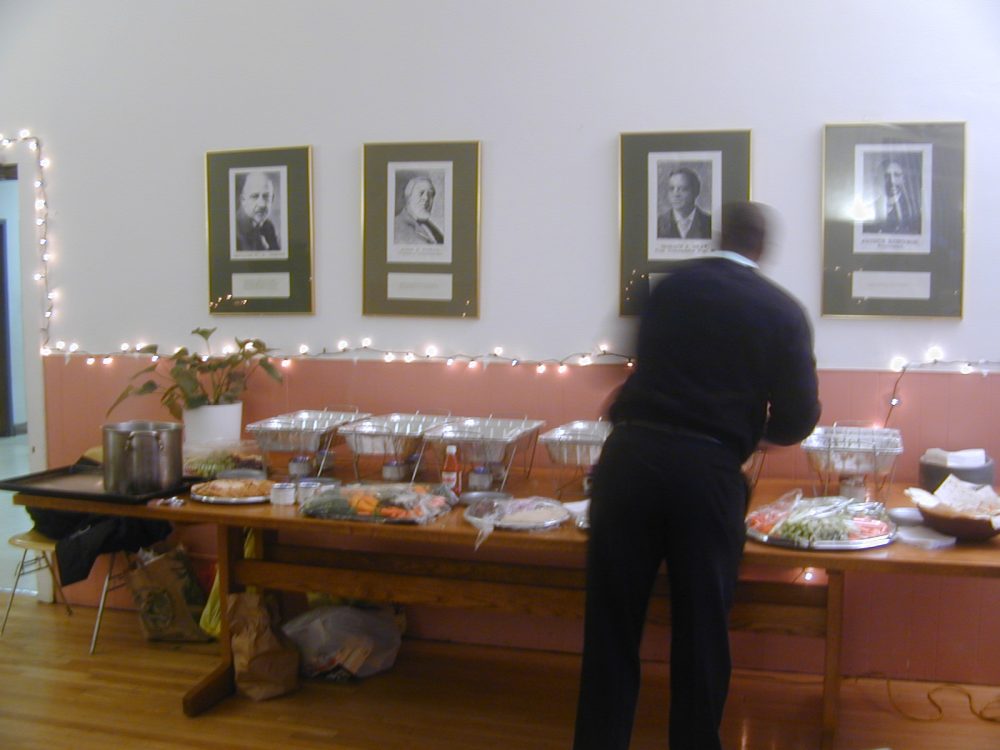
John Gilstrap helping out.
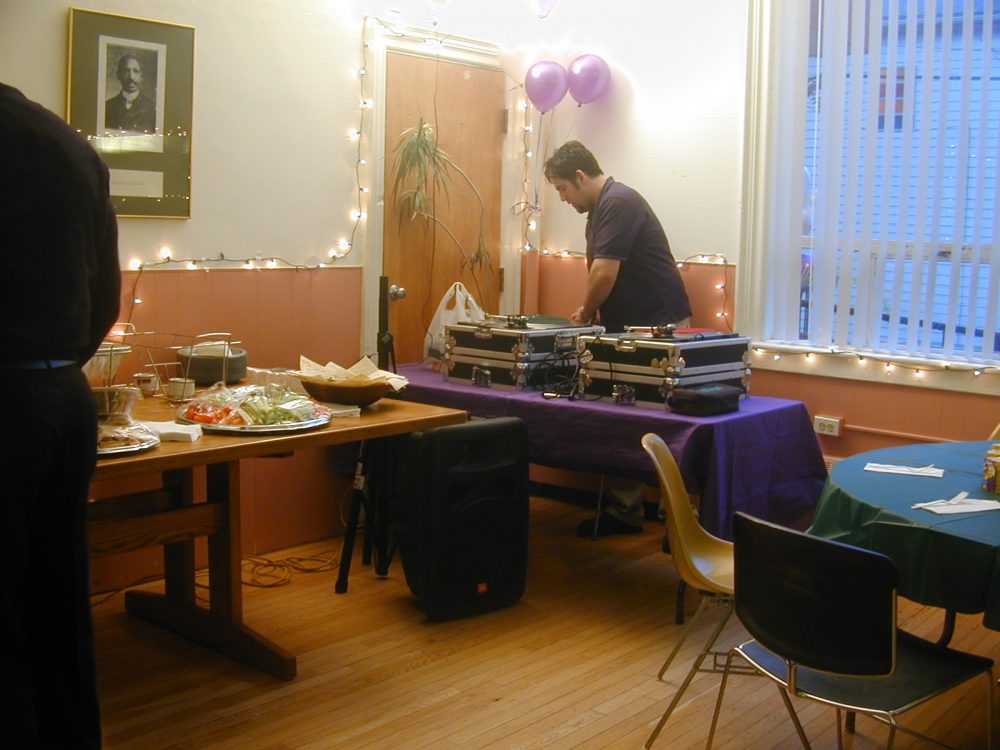
Jeffrey London – in charge of tunes…..
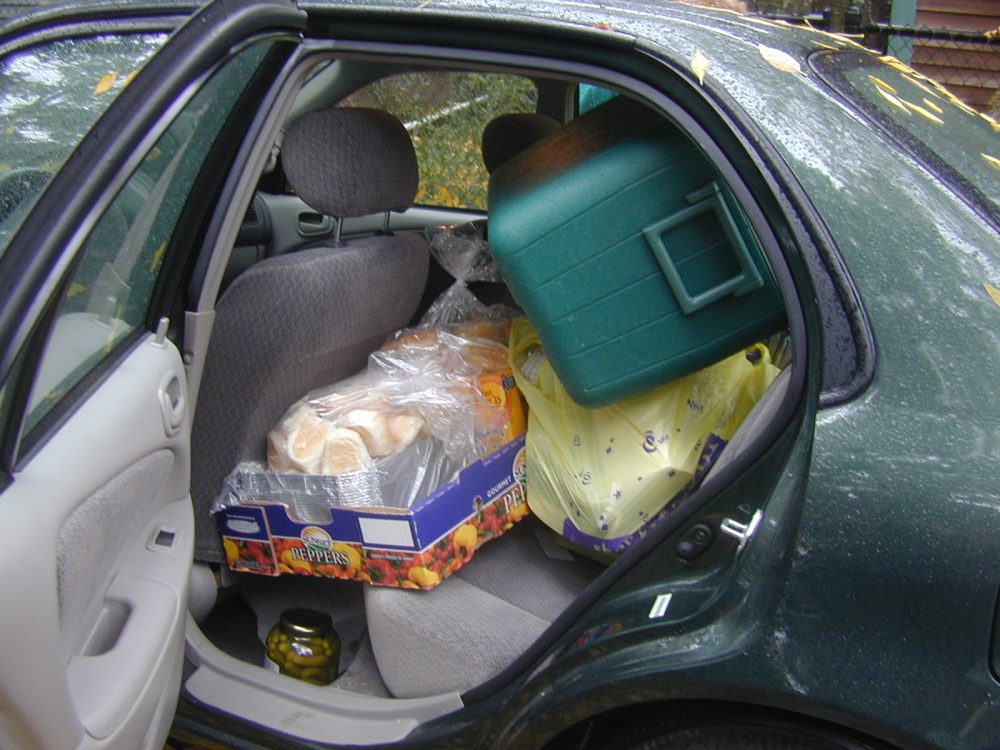
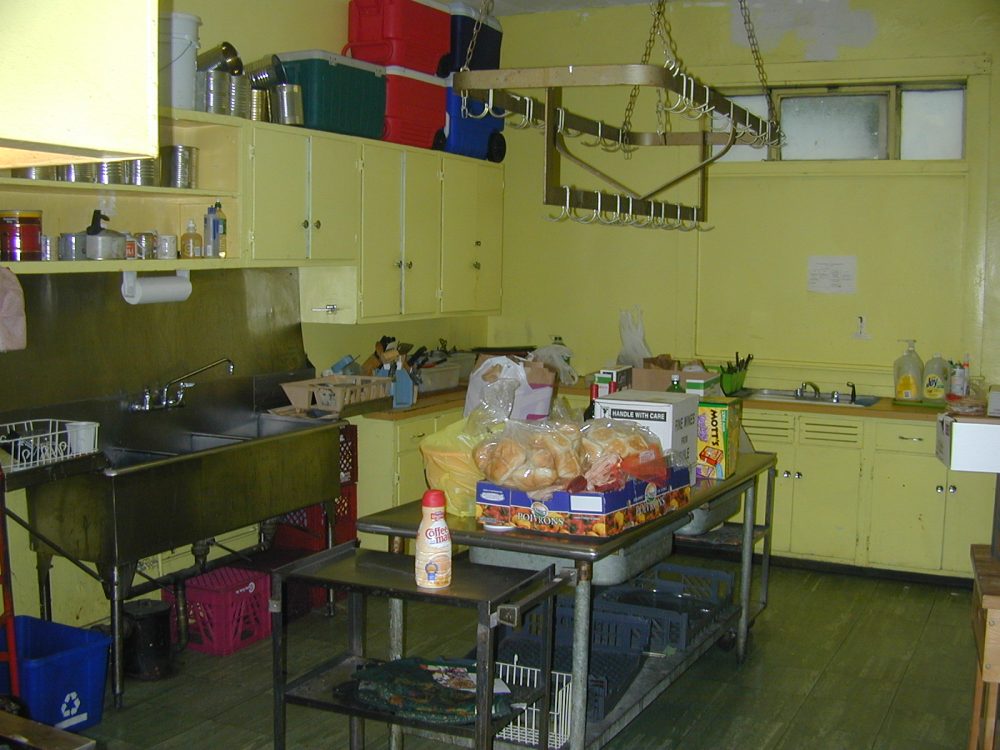
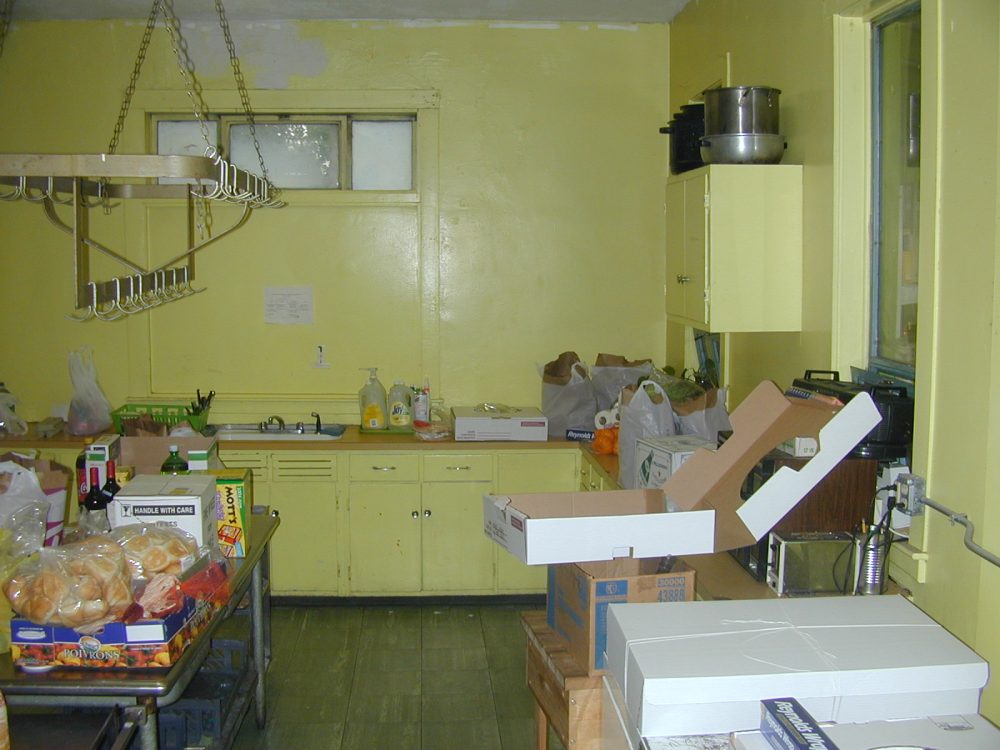
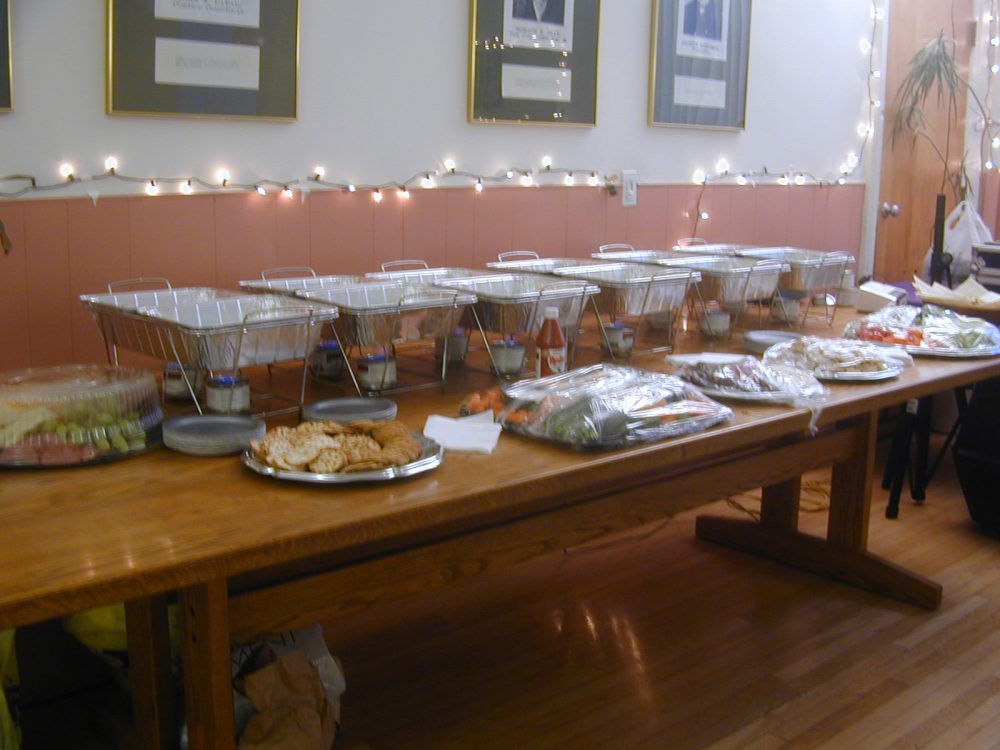
Actual anniversary was on June 19, 2002. party was held at the Cambridge Community Center where the actual marriage ceremony had taken place 25 years earlier.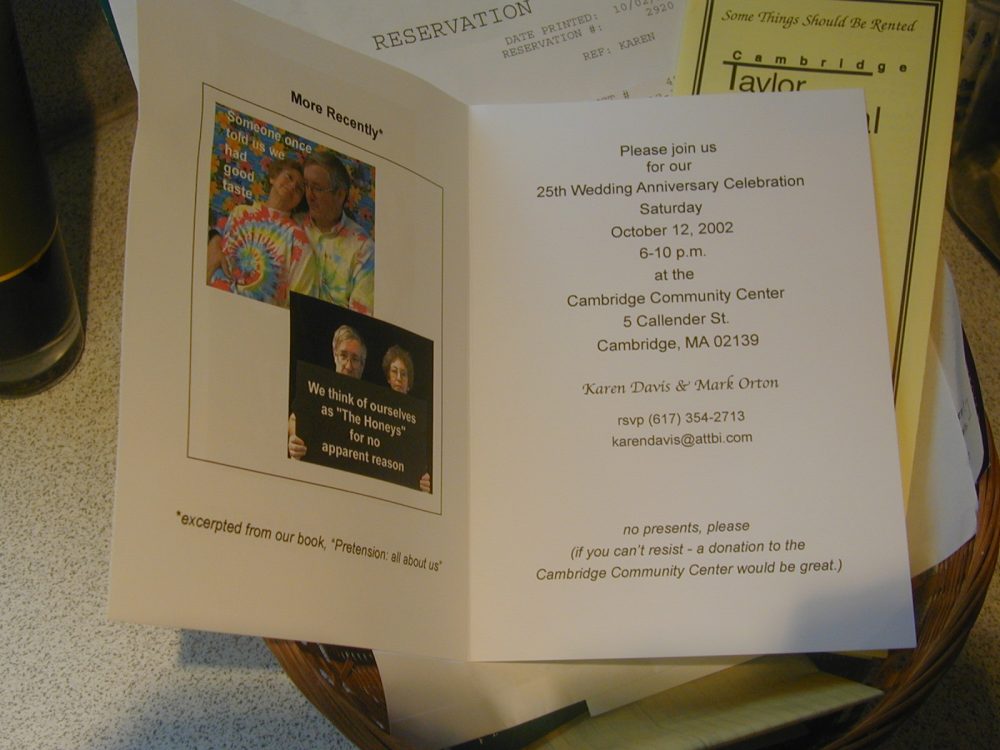
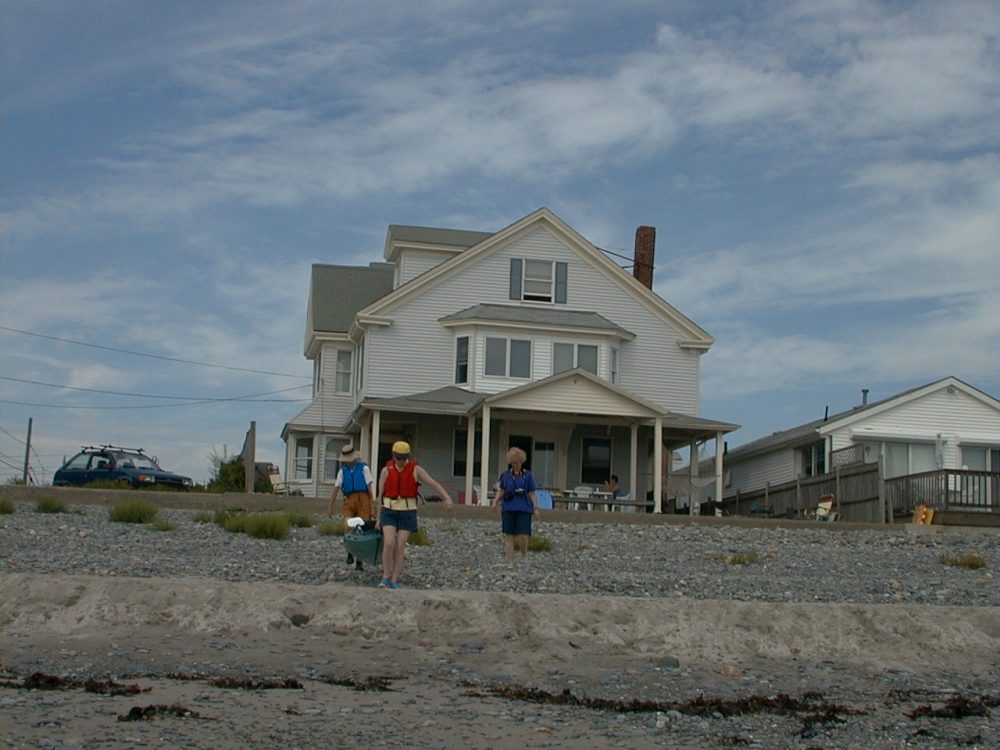
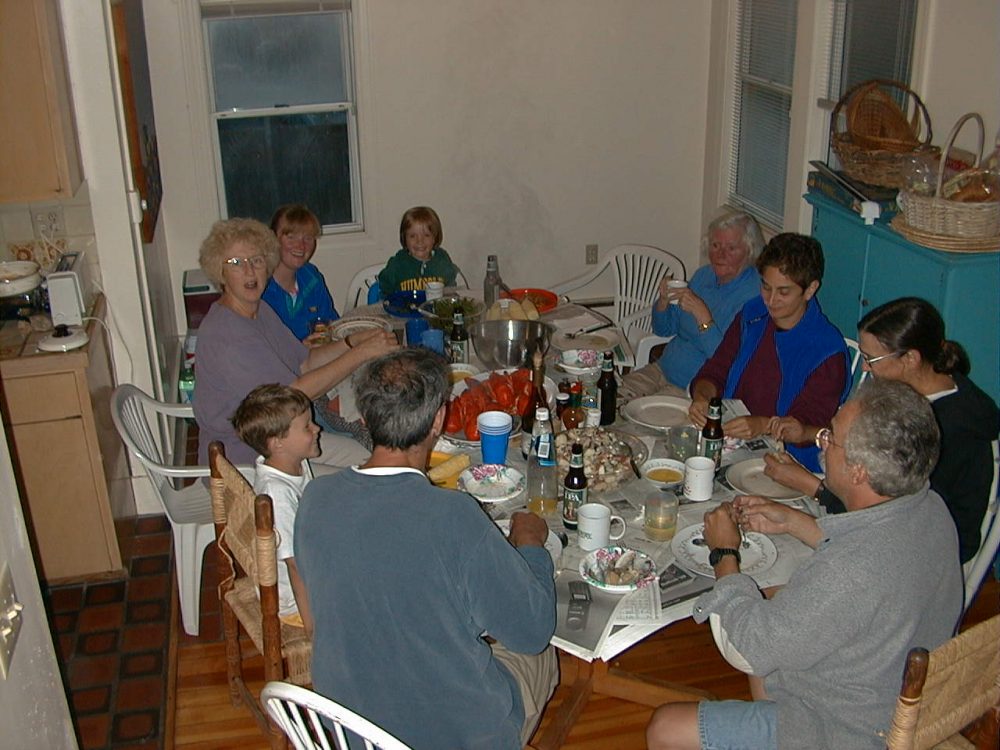
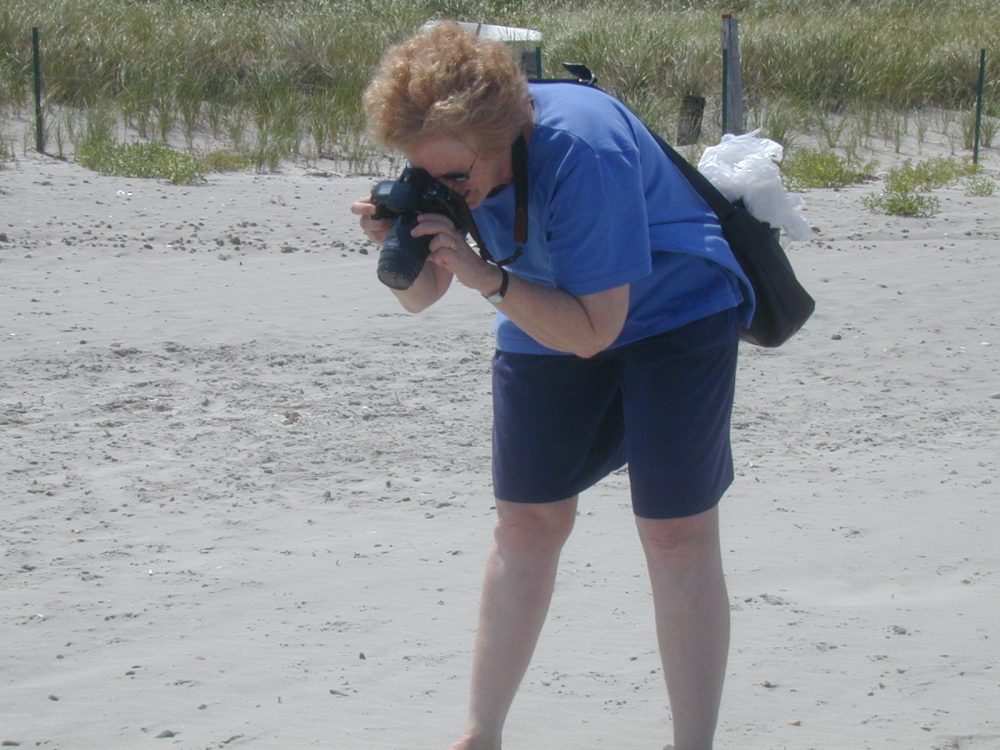
8/3/2002 – Friday – Nantasket Beach
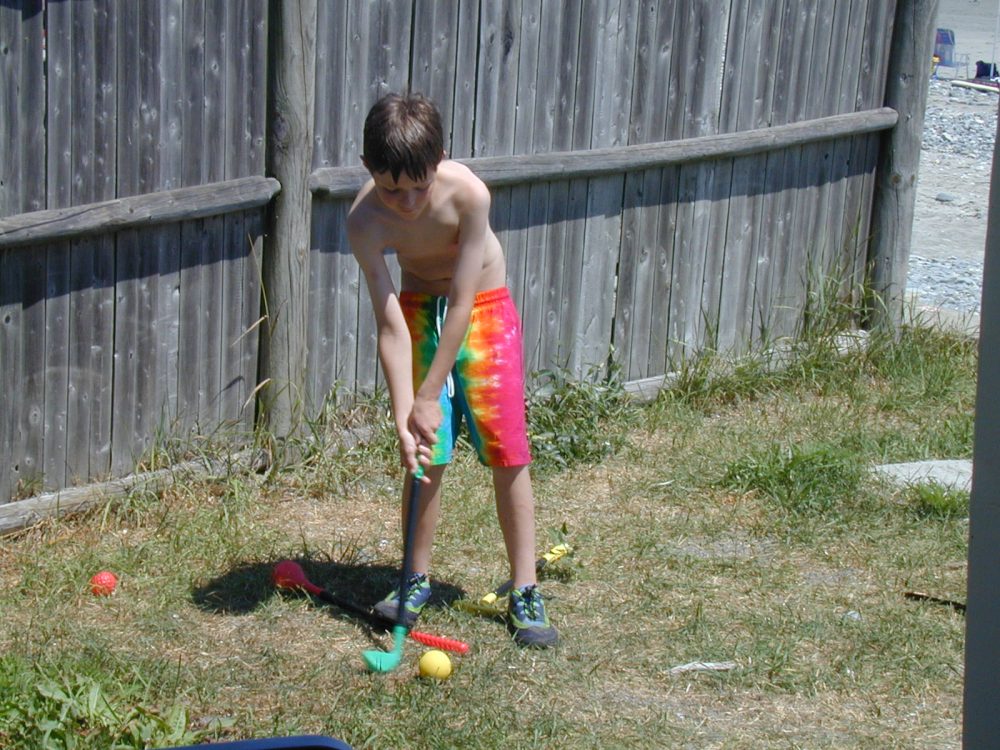
Parker Orton
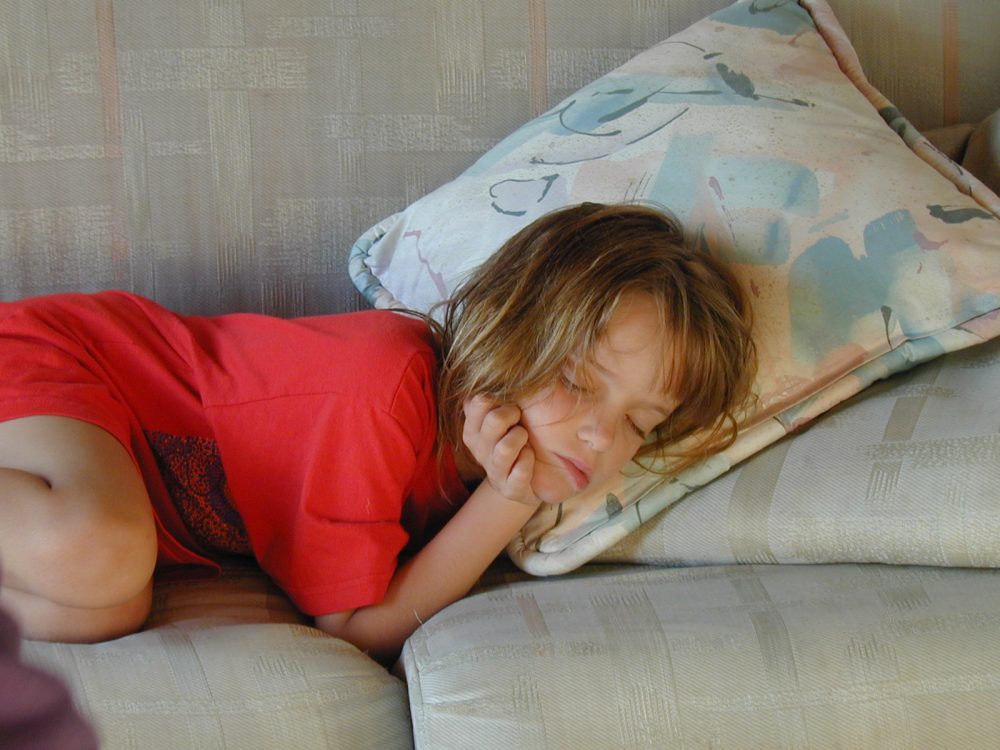
Maggie snoooozing
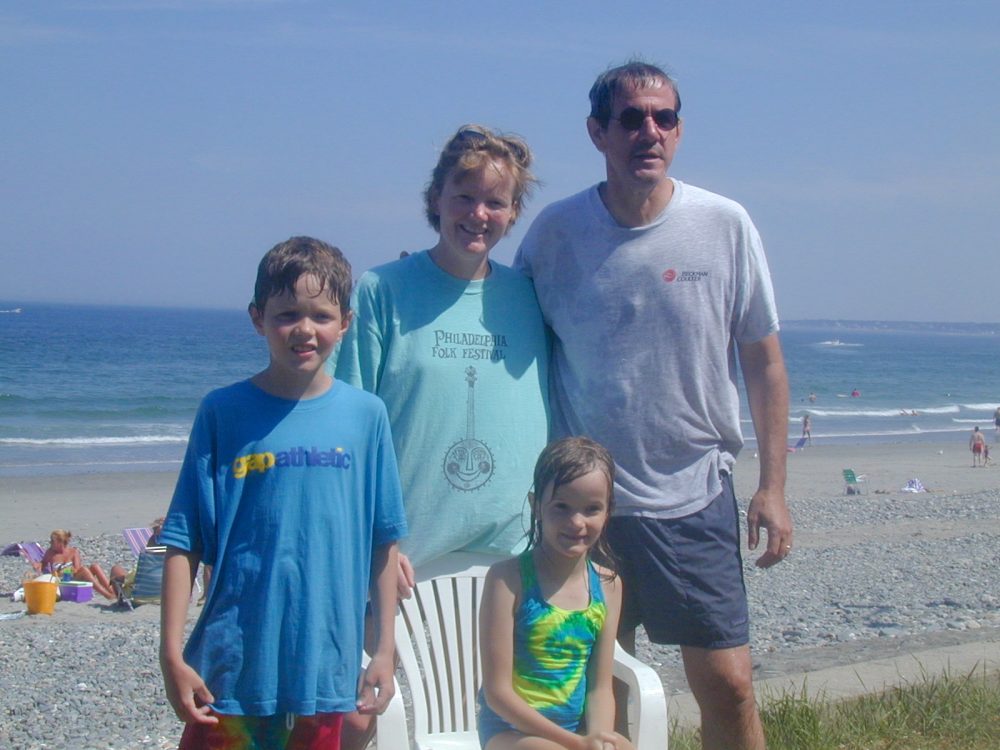
Parker, Meredith, Maggie, Ed
6/2/2002 – Greenland and Global Warming
an essay from the original markorton.com website:
Greenland and Global Warming
When I looked down into the Grand Canyon for the first time, I paused only for a moment at its immensity and moved right onto a more self-centered thought, “How tiny human history is in all of this, and even further, how much less significant my own life must be by extension.”
It is clear that human beings will not outlast Nature.
An article in the January 7, 2002 New Yorker magazine, Ice Memory by Elizabeth Kolbert suggests that Nature will win out in even the shorter run than my earlier musings.
Greenland is about the size of France and 80% covered by ice. The ice sheet or glacier is over ten thousand feet thick. “A hundred and thirty-eight feet down, there is snow dating from the American Civil War; some twenty-five hundred feet down, snow from the days of Plato, and, five thousand three hundred and fifty feet down, from the time when prehistoric painters were decorating the caves at Lascaux. At the very bottom, there is snow that fell on Greenland before the last ice age, which began more than a hundred thousand years ago.”
Starting in 1959 and continuing sporadically to this day, teams from various countries have drilled down through this ice and extracted cores on four or more occasions. At first no one was very interested in the cores, but a clever Danish scientist developed a technique that allowed for an accurate reading of the atmospheric temperature at the time each layer was deposited. This involves the ratio of two oxygen isotopes in rain water that is temperature dependent.
So, what do these ice cores reveal about the earth’s climate?
“Its hard to look much further back in the record, however, without feeling a little queasy. About twenty thousand years ago, the Earth was still in the grip of the last ice age. During this period, called the Wisconsin by American scientists, ice sheets covered nearly a third of the world’s landmass, reaching as far south a New York City.
The transition out of the Wisconsin is preserved in great detail in the Greenland ice. What the record shows is that it was a period of intense instability. The temperature did not rise slowly , or even steadily; instead, the climate flipped several times from temperate conditions back into those of an ice age, and then back again. Around fifteen thousand years ago, Greenland abruptly warmed by sixteen degrees in fifty years or less. In one particularly traumatic episode some twelve thousand years ago, the mean temperature in Greenland shot up by fifteen degrees in a single decade.”
So, over the last hundred thousand years of climate history captured in the ice there have been dozens of episodes of wild swings in temperature. But, taking a longer view, the earth has oscillated through warm periods of ten thousand years followed by ninety thousand years of cold during the last half million years. The warm period we now live in is now ten thousand years old; a cold period should follow.
Although us humans are persisting in all sorts of un-neighborly activities, in the end, we may not have enough time to do ourselves in before Nature catches us.
4/25/2002 – Boston Philharmonic
Boston Philharmonic
Benjamin Zander, Conductor
Thursday 4/25/2 Sanders Theater, Harvard University
Charles Ives (1874 – 1954): The Unanswered Question
Aaron Copland (1865 – 1957): Old American Songs – The Little Horses, I Bought Me a Cat, Ching-a-ring Chaw. William Warfield, Bass-baritone
Joseph Schwantner(1943 -): New Morning for the World (Daybreak of Freedom) William Warfield, narrator
Gustav Holst (1874 – 1934): The Planets
This was the last of this year’s four concerts.
Karen and I have concluded that these evenings have been so successful for us that we have already signed up for next year, though we have put in for seats further back, in the center mezzanine. This year’s row E seats were very close to dead center but too close for my tastes. So next year we will see how a bit more distance and a little elevation may improve our experience.
This evenings program started with the 1906-1908 piece, The Unanswered Question. I have heard this piece in recording, but clearly never understood anything about it until this performance. Ives called for a string orchestra with a trumpet and flutes off stage. Zander took full advantage of Sanders layout to stage a startling bit of ethereal music. The lone trumpet was up in the balcony on the left. The flutes were placed across the hall on the opposite balcony. The stage was dark and empty. The string orchestra was heard coming from back stage. The music is a strange amalgam of fairly straight forward tonal choral sonorities from the strings juxtaposed to the antiphonal janglings and calls back and forth between the trumpet and flutes.
The Copland adaptations of folk songs were sung by William Warfield, (here is a profile (opens new window) from the Riverwalk site) who is now 82 years old and whom both Karen and I remember from his appearances on TV in the 50’s. As an aside, he was born in West Helena, Arkansas very close to the site of the King Biscuit Flour Blues Festival that Karen and I attended a couple of years ago. Age has taken a predictable toll, but the spirit and heart is very much still there.
Warfield was thrilling.
The Schwantner piece is large and filled with an extensive percussion section. Warfield read the text of selections from Martin Luther King speeches. The program notes point out that the origins of this piece are with the Director of the Eastman School suggesting in 1979 that Schwantner compose something that would use Willie Stargell, a baseball player, as narrator. Schwantner and Stargell came to the King text selections collaboratively
The final piece, The Planets, was composed in 1914 – 1916 only a decade later than the Ives’ piece that opened the concert. This is another piece that I have heard only in recording. The opening section, Mars, the bringer of war, contains music later appropriated by Hollywood studio composers and would probably sound familiar to most. The orchestra is huge, including two harps, and several very obscure instruments, bass oboe and baritone tuba. Like the Ives the last section, Neptune, the mystic, fads away to only the sounds of an off stage women’s chorus.
Zander’s introductory remarks about each piece were as usual, fun and informative. The orchestra played with obvious gusto and pleasure throughout. Although I began the season with niggling complaints about the woodwinds not being completely up to their task, I close with much more enthusiasm for that section and a continuing enjoyment of the sound and precision of the strings.
4/26/2
3/19/2002 – Mr. Wonderful Makes a Movie
Mr. Wonderful Makes a Movie
March 19, 2002
A couple of weeks ago Miriam Goodman emailed me about a possible role in a student movie. I got in touch with Tova Goodman(link added in 2019), a student at Boston University, who let me know that they were looking for someone who could be “professorial”.
Hmmm, I thought, just the role for the Great Pontificator, Mr. Wonderful.
But, not wanting to lead the young’uns astray, I sent along my “head shots” .
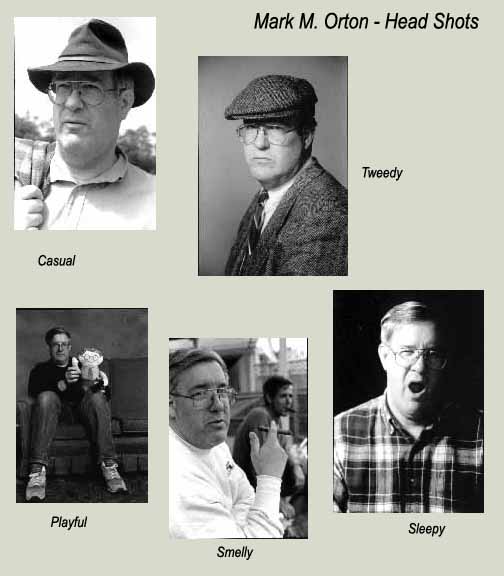
Karen created this array!
If these didn’t scare them off…….
One email later and the Director, Chris Zatta(link added in 2019), signed me up to play the role of Professor Connel with a script called “Forensics”.
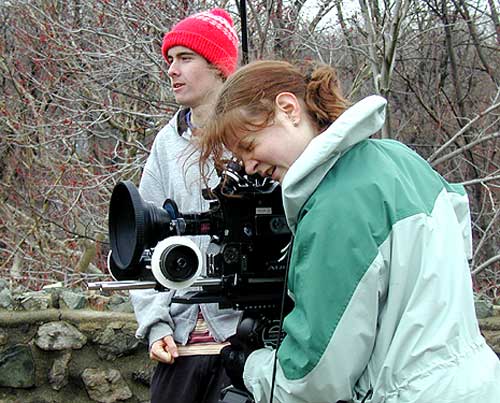
Dir. of Photography Rachel Cushing and Sound Boom man, James Kolowich, get set up.
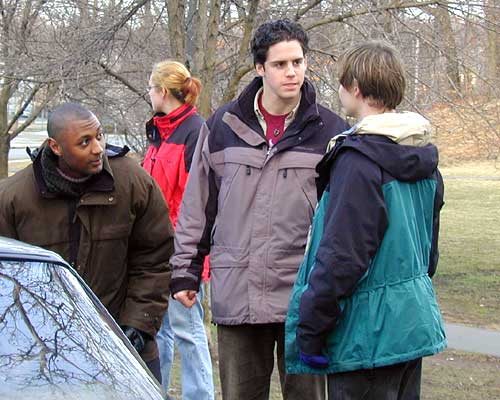
Discussions between Dir. Chris Zatta (center) and actors Christian Chandler (left) and Michael Makowski.
The Saturday shooting began with the scenes in a park in Malden and abutting woods (good place for corpses).
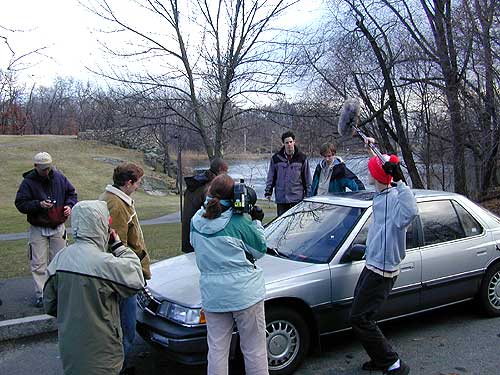
Dir. Chris Zatta (in gray coat center rear) watches as actors practice getting the body out of the rear seat.
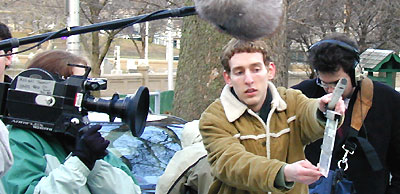
Sound and camera at the ready.
What is the clacking of the board on the slate at the beginning of a scene all about?
We all have heard dialogue like this:
“Scene 12, Take 3…..
sound, roll camera…..(clack)…(pause)
Action!”
So, what is the clack about when the assistant smacks the hinged top down on the slate. I asked the Director of Photography, Rachel Cushing, exactly this question.
The answer is instructive about the technologies of movie making:
The sound recording system and the camera are independent. So, the sound of the hinged top smacking down right in front of the rolling camera makes it possible for the editor to later synchronize the visible signal with the sound signal to merge these elements together.
Indoor Shoots
Since Professor Connel only appears in about a third of scenes in the movie, I only had to hold out in the raw weather for half the day. The indoor shooting for the “lab” scenes began in early evening on the eighteenth floor of a Boston University dormitory.
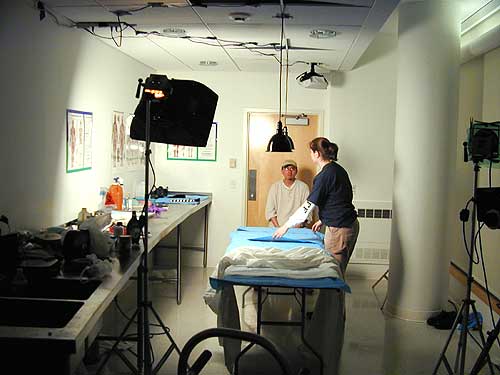
All around miracle worker and gaffer Hero Ngauv sets up for the lab scenes. Director of Photography Rachel Cushing helps out.
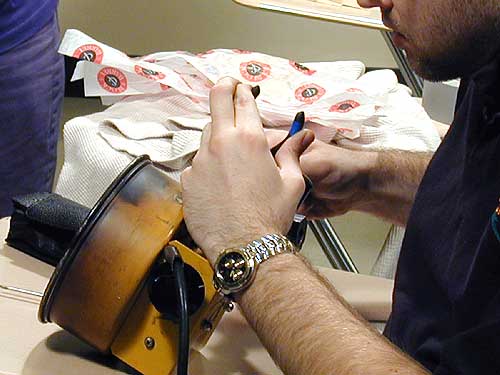
Repairs are made.
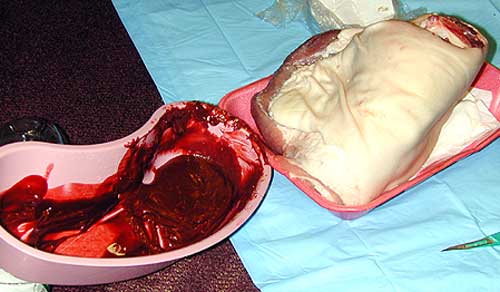
Preparation for gore. By the way, the stage blood here included peanut butter and chocolate syrup among its ingredients.
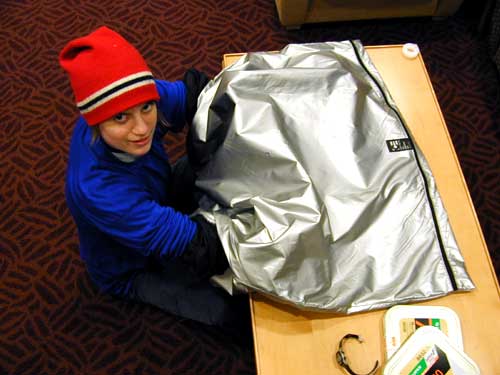
Tova Goodman loading film into cartridges for the camera.
More Indoor Shooting
Sunday brought more shooting indoors at several locations. Other scenes took place in Prof. Connel’s classroom. Four actors get ready to rehearse.
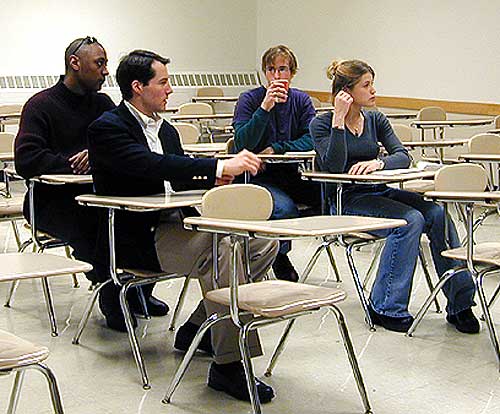
(from left, Christian Chandler, Michael Cuddire, Michael Makowski, Anastasia Barnes)
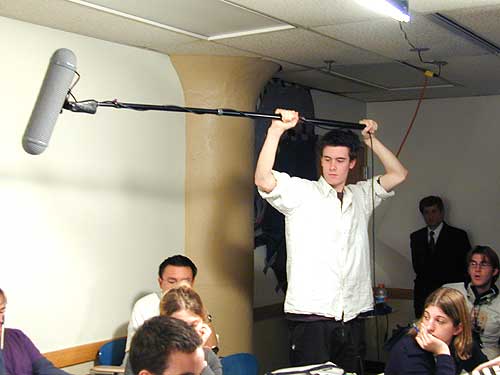
Sound boom operator, James Kolowich, holds for a sound check in the classroom.
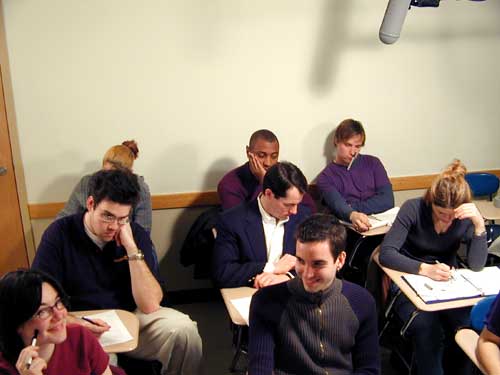
A run through of action at the back of the class.
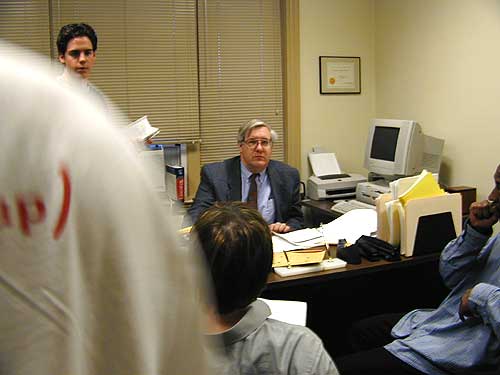
Prof. Connel (Mr. Wonderful in costume) in this office scene. Director Chris Zatta (head at top left) making a point about the scene.
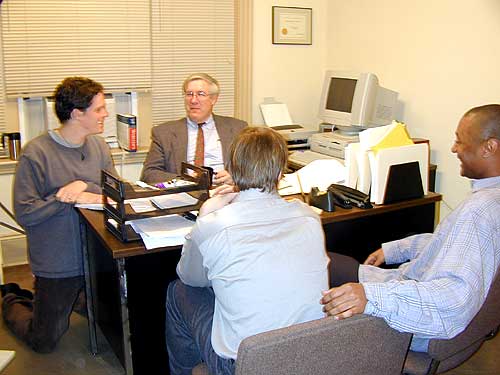
Director Chris Zatta begging Mr. Wonderful,
“Mark, this is Take 19!
Can’t you say your one line, “Oh”, without making it sound like a question!!”
A Management Aside
This photo symbolizes for me how well the students in the production demonstrated well-developed leadership and team skills.
Notice that Chris Zatta, has gotten down on his knees so that his face is at my level. Instead of standing over me giving directions, he is conferring with me, a very different experience.
I saw him handle a whole range of situations with actors and others with such sophistication.
At points, members of the crew would proffer suggestions for how to interpret a scene or overcome a technical barrier. All of this happened in a collegial fashion. No one hesitated to ask others on the team for suggestions and help.
At every point, everyone, regardless of role, tossed in readily to move equipment and tussle with trash and pick up. No prima donnas here.
It has been my experience in industry that this sort of team work comes hard, and, not infrequently, only after some explicit training on team work.
Perhaps we should send managers to film school??
In the Can
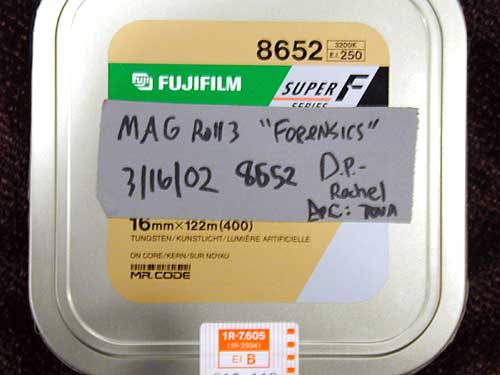 So, its in the can.
I can only hope that most of Mr. Wonderful’s gaffes end up on the cutting room floor….
See The Movie
Come to the screening of the movie (and a bunch of other student-made movies) on Friday, May 17, 2002 at 7pm at the BU Photonics Center, 8 St. Mary Street.
(St Mary Street is off Comm. Ave on BU’s campus. Directly across from St. Mary
Street on Comm. Ave is the Marsh Chapel. There is a Radio Shack store on the
corner.)
Seating is free and open to anyone, but it is limited so you’ll have to get
there early enough to make sure you can get in.
Each of the movies will be 10 – 15 minutes in length. Contact me for details.
02122002 – Short Words
Short Words
“Short words”
(stolen from the Economist Style Guide (021202)
Use them. They are often Anglo-Saxon rather than Latin in origin. They are easy to spell and easy to understand. Thus prefer about to approximately, after to following, let to permit, but to however, use to utilise, make to manufacture, plant to facility, take part to participate, set up to establish, enough to sufficient, show to demonstrate and so on. Underdeveloped countries are often better described as poor. Substantive often means real or big.
“Short words are best and the old words when short are best of all.” (Winston Churchill)
02252002 – New Words
From the original website a list of “new words”:
New Words
Defalcate
Manias, Panics, and Crashes; a history of financial crises by Charles P. Kindleberger (Wiley: New York 2000)
“Greed not only creates suckers to be swindled by professionals but also pushes some of the amateurs over the line into fraud, embezzlement, defalcation, and similar malfeasance.” (p.76)
INTRANSITIVE VERB: Inflected forms: de·fal·cat·ed, de·fal·cat·ing, de·fal·cates
To misuse funds; embezzle.
ETYMOLOGY: Medieval Latin dfalcre, dfalct-, to mow, deduct : Latin d-, de- + Latin falx, falc-, sickle.
OTHER FORMS: defal·cation (dfl-kshn, -fôl-, dfl-) —NOUN
de·falcator —NOUN
(The American Heritage® Dictionary of the English Language, Fourth Edition.via bartleby.com)
11/16/02
Alembic
Wall St. Journal 8/14/02 – in an article by William McGurn, “Just Don’t Call It ‘Scotch'”:
” How many Jack Daniel’s or Johnny Walker drinkers, I wonder, appreciate that they owe their favorite tipple to the Irish monks, who in the sixth century brought back from the Middle East the alembic used to distill perfumes but soon adapted it to much more felicitous use?”
ALEMBIC
NOUN: 1. An apparatus consisting of two vessels connected by a tube, formerly used for distilling liquids. 2. A device that purifies or alters by a process comparable to distillation.
ETYMOLOGY: Middle English alambic, from Old French, from Medieval Latin alembicus, from Arabic al-’anbq : al-, the + ’anbq, still (from Greek ambix, cup)1
Terne Coated Stainless Steel
I saw this term at an architectural exhibit concerning the new American Folk Art Museum building in New York City. It was used to described the exterior wall covering for one portion of the building.
The term “terne” refers to an alloy of lead and tin that is applied to various steels for corrosion resistance. Typically the portion of tin is approximately 15%. It serves as a wetting and bonding agent to provide good adhesion for the lead to the underlying steel. Terne here is borrowed directly from the French and means “dull”.
When applied to stainless steel the chief appeal of the terne coating is the fact that it tarnishes to a dull grey color within a year of exposure to weather. Thus you get the tremendous life and low maintenance of stainless without the accompanying shiny appearance.
Follansbee, a company in West Virginia, produces specialty coated carbon and stainless steel architectural cladding materials. Their site (opens in a separate window) is interesting on this topic.
(05/16/02)
On a recent visit to New York I happened by the now completed American Folk Art Museum and examined the exterior wall. Here is a picture of the terne coated stainless steel. The weathering process has not yet produced the “dull” finish.
Zucchetto
Seen in an article in the New York Times (05/11/02) about Cardinal Bernard Law describing his head gear.
NOUN: Inflected forms: pl. zuc·chet·tos or zuc·chet·ti (-t)
A skullcap worn by certain Roman Catholic clerics, varying in color according to rank.
ETYMOLOGY: Italian, variant of zucchetta, diminutive of zucca, gourd, head. See zucchini.
(The American Heritage® Dictionary of the English Language: Fourth Edition. 2000) (051502)
Yarmulke
Seeing the word zucchetto (above) reminded me of the Jewish tradition of covering the head with a yarmulke.
VARIANT FORMS: also yar·mel·ke
NOUN: A skullcap worn by Jewish men and boys, especially those adhering to Orthodox or Conservative Judaism.
ETYMOLOGY: Yiddish, from Polish and Ukrainian yarmulka, possibly from Turkish yamurluk, rain clothing, from yamur, rain.
(The American Heritage® Dictionary of the English Language: Fourth Edition. 2000) (05152002)
Pull Quote
“….my editing work includes basic grammar checking, improving the clarity of the writing, identifying pull quotes, and so on.” (Linda Larson, editor of Spare Change speaking of her work on the paper)
A pull quote is a snippet taken from the article and placed in larger type and perhaps in a box within the boundaries of the article. The purpose of the pull quote is to entice the reader to in fact read the article; thus, the quote “pulls” the reader in.
(4/23/2002)
Raclette
“…. few were moved to put down their bratwurst or raclette to applaud.” (Wall St. Journal 2/28/2002 front page article, “William Tell Overture: Swiss Enlist Heroes in Fight Over the UN”
NOUN: 1. A Swiss dish consisting of cheese melted and served on boiled potatoes or bread. 2. A firm cheese used in making this dish.
ETYMOLOGY: French, from racler, to rake, scrape, from Provençal rasclar, to rake, from Old Provençal, from Vulgar Latin *rsculre, from *rsculum, diminutive of Latin rstrum, rake. See rd- in Appendix I.
(The American Heritage® Dictionary of the English Language: Fourth Edition. 2000)
(3/4/2002)
Protist
“Any of various complex one-celled organisms of the kingdom Protista, that have nuclei and organelles and that are either free-living or aggragated into simple colonies: includes the protozoans, slime molds, and eukaryotic algae. From Latin protista and Greek protistos, the very first.” (Random House Webster’s Collegiate Dictionary, 1997).
This word came to my attention via third grade homework for my nephew Parker. Boy, if he is learning words like this in third grade, I guess Ed and Meredith can stop saving the money for Harvard!
(3/1/2002)
Podology
“They relocate sources according to social (i.e. demographic, political, and geopolitical) and natural (i.e. climatological, podological, and geological) attributes as these relate to the material requirements of the reproduction and extraction of the raw material and to the spatial, topographic, and hydrological determinants of the cost of access and transport.”
(from a manuscript dated 02/12/2002, Matter, Space, Energy, and Political Economy; The Amazon in the World System by Stephen G.Bunker)
Based on a Google search of the Web, podology is widely used as a synonym for podiatry. The root “pod” is clearly from Greek for foot. Podological is similarly used pretty exclusively to refer to feet, not excluding horse’s hooves and others.
What are we to make of Bunker’s usage here? Given the context, I would read this to refer to the characteristics of terrain with regards to ease of traverse. For instance, many rural residents of northern areas of the US refer to the period in the spring before the ground dries out as the “muddy season”. During this period, excepting high ground and paved surfaces, moving about is a podological nightmare.
Enron, Trust and Malfeasance
Leave a reply
January 23, 2002 (revised 1/29/02)
The collapse of energy giant Enron over the last six months has produced a surprising level of outrage especially for a cynic like me.
As this drama continues to unfold, I have been trying to understand how Enron structured their business and made money. Until just last night I was operating on the belief that the cleverness and sophistication of Enron’s managers simply outstripped my analytical skills. But, as I have been following the writing in the NY Times and Wall St. Journal, slowly it has come to me that they don’t understand the maze of structures and deals employed by Enron for years either.
Then, last night, on the Jim Lehrer News Hour on PBS, Paul Solman, one of the regular financial reporters, gave his analysis of what has been going on. After listening to Solman’s report, it is clear that Enron has been engaging in massive deceit, deception, and downright criminal activity for years.
Now, I must admit to some familiarity with the habits and attitudes of managers. I am used to the aggressive behavior of managers trying to stretch the accounting systems to make the most recent quarter look good. In fact, I have participated in such activities. But, Enron has engaged in a long-term shell game aided and abetted by its accounting firm, Arthur Andersen, LLC. The failure of the government (the SEC) and more importantly, the audit companies, to provide oversight, transparency, basic facts, and above all the application simple commonsense ethics to a huge company’s activities is outrageous. It undermines the credibility of the economy. If Arthur Andersen, one of the oldest and most prestigious audit firms can be so blind over so many years, what are we to make of their, and other audit firms’ reliability for oversight of all the other firms so many of us hold in our 401K funds?
It will be interesting to see how the government and the financial institutions of capitalism react to this. It is a basic tenant of the capital and equity markets that timely, transparent information is essential not only to the best and highest use of our capital resources, but also to the maintenance of trust in a reasonably fair play space.
You can see the Solman report on the PBS web site (opens in a separate window)
And, from Friday January 25, 2002, here is more Solman on Enron (opens in a separate window)