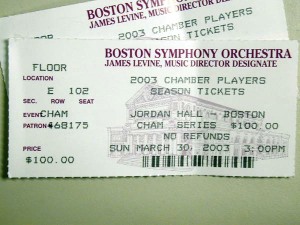
Karen created this. Not sure of the occasion.
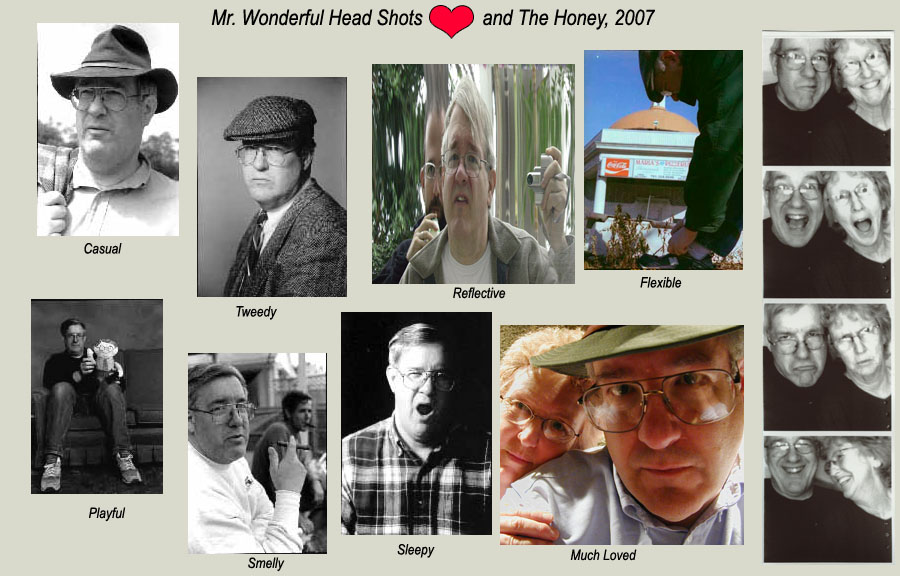

Karen created this. Not sure of the occasion.
 In June 2001 I came down with a mysterious illness that quickly landed me in the hospital. Before too long, I could barely walk nor readily take a pee. Sharp pains ran up and down both legs and there was a spreading lack of sensation from the waist down accompanied by extremely sensitive, constantly painful feet.After a myriad tests and proddings by all sorts of interns, residents, and specialists, it was determined that I was in fact quite sick and getting worse. Based on a recent camping trip to Cape Cod and a strange red spot in my groin area (already disappeared from sight) Lyme disease was suspected. All the other testing and probing had eliminated a large number of nasty possibilities, but the tests for Lyme revealed nothing.
Nevertheless, it was decided that, since I was continuing to get worse, we should assume a bacterial origin and start antibiotics, Ceftriaxone in this case. Well, within a day or so, my symptoms showed a small improvement. Diagnostic victory was declared. After the installation of a catheter in my arm, I was sent home for a month of intravenous treatment. Not to drag this on, by August, I was going to the office for a couple of hours a day. By New Year’s day I had started to walk on a treadmill again. Today, I am continuing to recover. L’Hermite’s Sign is almost completely gone and the chronic pains in my feet amazingly still improve. My regular physician, Stanley Sagov, always introduces me to his student doctors as, “an interesting case”, but Edward Wolpow, my neurologist has sent me on my way with the parting words, “Try not to get neurotic about this, maybe you will continue to heal, but maybe you won’t”.
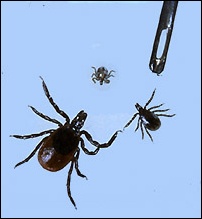
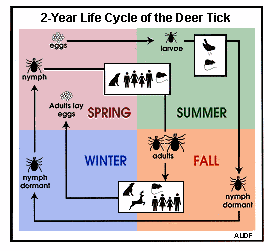
larva, nymph, adult
Deer Tick (ixodes scapularis)
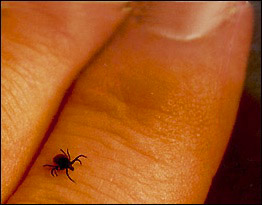
adult tick on finger
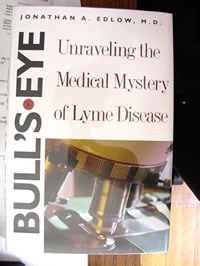
Bull’s Eye is a terrific book on a number of levels.
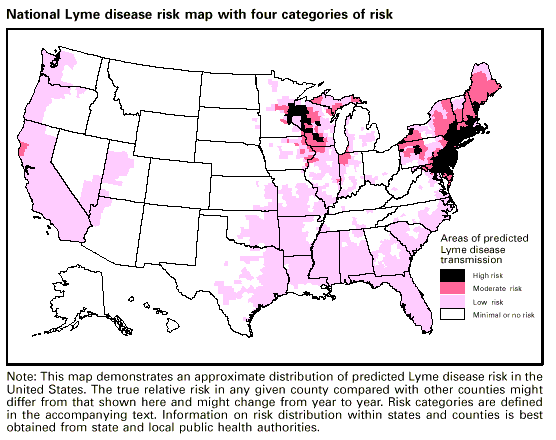
First, there is the tale of how Lyme came to be recognized as a disease with appropriate backtracking to Europe and elsewhere for discussions of earlier intimations. The early phase of the discovery included mysterious rashes and arthritis that finally is recognized to have a geographic pattern. Then researchers began to do the basic epidemiological studies required. But, meanwhile all of the standard medical tests for bacteria and viruses as a potential source provided no real leads. Then, there are the examples of the various medical specialties trapped in there own worlds looking at the range of symptoms that cross fields like dermatology, rheumatology, infectious diseases, cardiology, and neurology being among the prominent ones. Since there was no clear origin for the disease, if in fact it was a disease, each specialty tended to head of on its own track.
At the request of some doctors from Yale patients began to save ticks and other insect that had bitten them. This lead finally to the deer tick. And this is a second delight of this book. the author pauses to provide fairly lengthy discussions of sometimes technical topics in an accessible language.
Meanwhile, there was still no direct connection between the ticks or any other biological agent and Lyme disease. Nevertheless, the usual trial and error of medicine had already produced two approaches to treatment, one centered on the notion that the cause was a bacterium, and the second that a virus was the troublemaker.
 By the late 1980s, research has shown that Lyme disease was caused by a spirochete bacteria named B. burgdorferi that was transmitted to human beings through a bit by an infected tick, Ixodes dammini. Once infected people typically got a rash that was red, flat and round with a central clear spot, the bulls eye.
Left untreated, the rash would ultimately resolve itself. In many patients no further symptoms would arise. But in many untreated cases stage two symptoms would develop. About 15% develop neurological problems like meningitis, Bell’s palsy, radiculitis, and others. About 10% of the untreated developed inflammation of the heart and finally about 60% developed arthritis, often of the knee.
So why is Lyme disease so controversial? 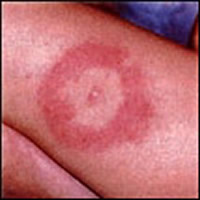
Here again, Bull’s Eye provides an educative trip through some pretty complex issues. First, there is the issue of proper diagnosis of Lyme. In my case, several tests at different times never showed that I had in fact been infected. Bull’s Eye details the problems with diagnostic tests and the likelihood of false positive and negative results. For the male of the species, this discussion was a useful revisit to the problems with the current tests for prostate cancer.
Then, there are those Lyme disease patients who develop long-term problems that are extremely resistant to treatment. And, given the vagaries of the diagnostic tools, it is perfectly possible that some or many of those late-stage patients may not be suffering from Lyme at all.
This has lead to continuing controversies about what type of antibiotics to use and how long the treatment should run. Given the fact that these intensive courses require intravenous methods, keeping a person on antibiotics for months at a time raises all sorts of issues of iatrogenic outcomes, cost, and efficacy.
Meanwhile, there was still no direct connection between the ticks or any other biological agent and Lyme disease. Nevertheless, the usual trial and error of medicine had already produced two approaches to treatment, one centered on the notion that the cause was a bacterium, and the second that a virus was the troublemaker.
By the late 1980s, research has shown that Lyme disease was caused by a spirochete bacteria named B. burgdorferi that was transmitted to human beings through a bit by an infected tick, Ixodes dammini. Once infected people typically got a rash that was red, flat and round with a central clear spot, the bulls eye.
You might ask, “How do I avoid Lyme?” The answer is, “With difficulty.”
As a closing note, if you develop any of the symptoms of the “acute” stage, get yourself immediately to a doctor. A standard course of oral antibiotics has proven to be amazingly effective in controlling this nasty disease.
Here is a list of symptoms taken from the American Lyme Disease Foundation web site (these match up very well with the Appendix B list in Bull’s Eye):
Along the Mystic River in Somerville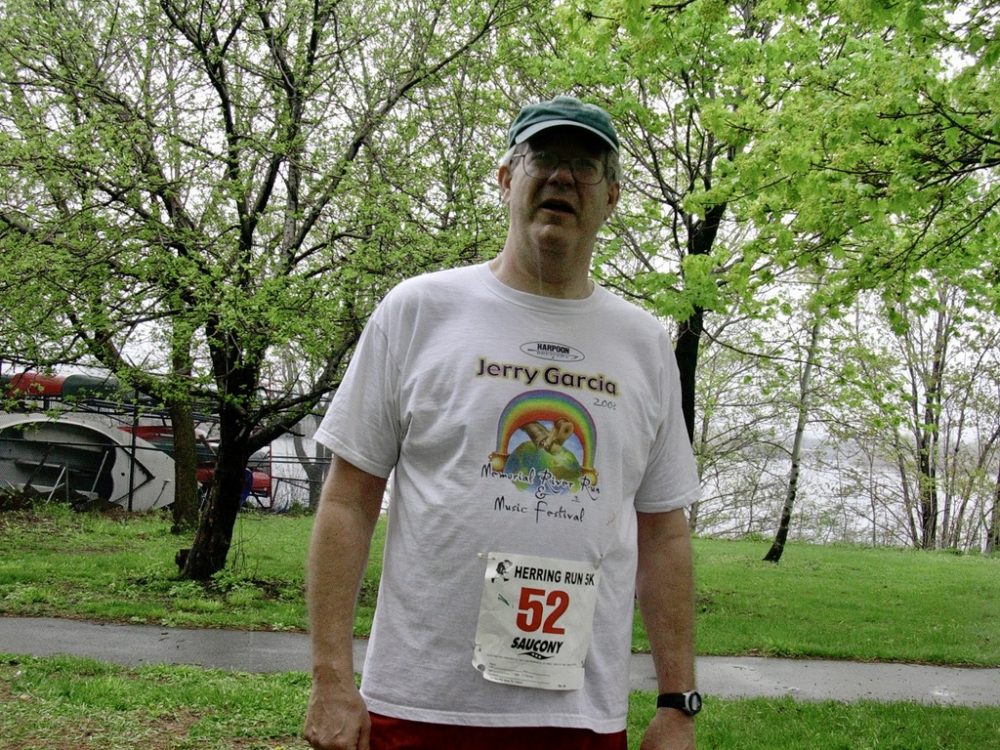
For years I have watched other runners as they go by me (and to be sure, with my galumphing pace this is the only way I experience other runners while I am out “running”). It has always struck me that humans are built to run. Many runners seem to float along with an effortless rhythm, others thump along, and others, with joints not so symmetrical in their functioning, just keep running.
A few months ago I saw a note (the reference now lost in my foggy memory) that some scientists posited that human beings had actually run large prey animals to ground because very few animals are built to run distances. So, the notion goes, humans could simply exhaust prey by outrunning them over the long distance. At the time I saw this note, I thought that it seemed to be a pleasing notion, but wondered about how these scientists could demonstrate that, in fact, this was a mode for human hunting?
Yesterday, The New York Times ran an article, “Running Extra Mile Sets Humans Apart in Primates’ World” (https://www.nytimes.com/2004/11/18/science/running-extra-mile-sets-humans-apart-in-primates-world.html) by John Noble Wilford, that adds new fuel to this notion that long-distance running is an important step in the evolution of human capabilities.
“Endurance running, unique to humans among primates and uncommon in all mammals other than dogs, horses and hyenas, apparently evolved at least two million years ago and probably let human ancestors hunt and scavenge over great distances. That was probably decisive in the pursuit of high-protein food for development of large brains.
The apparently crucial role of running in human evolution has been largely overlooked in previous research. But today, the two scientists, Dr. Dennis M. Bramble of the University of Utah and Dr. Daniel E. Lieberman of Harvard, report in the journal Nature that their analysis of the fossil record found striking anatomical evidence for the capability of prolonged running in the Homo genus, beginning about two million years ago.
By two million years ago, Dr. Bramble and Dr. Lieberman noted, early species of the Homo family, notably Homo erectus, had long, slender legs for greater strides. They had shorter arms and a narrower rib cage and pelvis. Their skulls included features to help prevent overheating. A ligament attached to the base of the skull kept their heads steady as they ran.
Although tissues do not fossilize, traces of muscle and tendon attachment points on bones of early species revealed an extensive network of springy tendons along the back of the legs and feet, including a well-developed Achilles tendon that anchored calf muscles to the heel bone. Tendons served to store and release elastic energy during running but were not needed for ordinary walking.
And there was the gluteus maximus, the muscle of the buttocks. Earlier human ancestors, like chimpanzees today, had pelvises that could support only a modest gluteus maximus, nothing like the strong buttocks of Homo.
“Have you ever looked at an ape?” Dr. Bramble said. “They have no buns.”
Dr. Lieberman, a paleontologist, explained: “Your gluteus maximus stabilizes your trunk as you lean forward in a run. A run is like a controlled fall, and the buttocks help to control it.”
The scientists compiled a list of 26 traits connected with running that early Homo specimens exhibited. It was a result of 13 years of research that started with watching pigs running on a treadmill.
“Dennis and I noticed how the pigs can’t hold their heads still while running,” Dr. Lieberman recalled. “Any good human runner keeps his head still because of the nuchal ligament, a tendon in the back of the neck.”
The scientists learned that all accomplished running animals, modern or fossil, had a mark in the skull where the nuchal ligament had been. They found it in early Homo specimens, but not in Australopithecus, the genus that lived more than three million years ago and included the 3.2-million-year-old Lucy skeleton.
“That was an epiphany for us,” Dr. Lieberman said.
Dr. Philip Rightmire, a paleoanthropologist at Binghamton University in New York, said the Bramble-Lieberman hypothesis was “a pretty compelling picture of the importance of running in human evolution, and overall, I’m very impressed.”
Here is a graphic that accompanied the NYT’s article showing anatomical features associated with the innovation towards running:

I will follow up with a visit to Nature, the journal where the original research has been published.
Run, run, run……
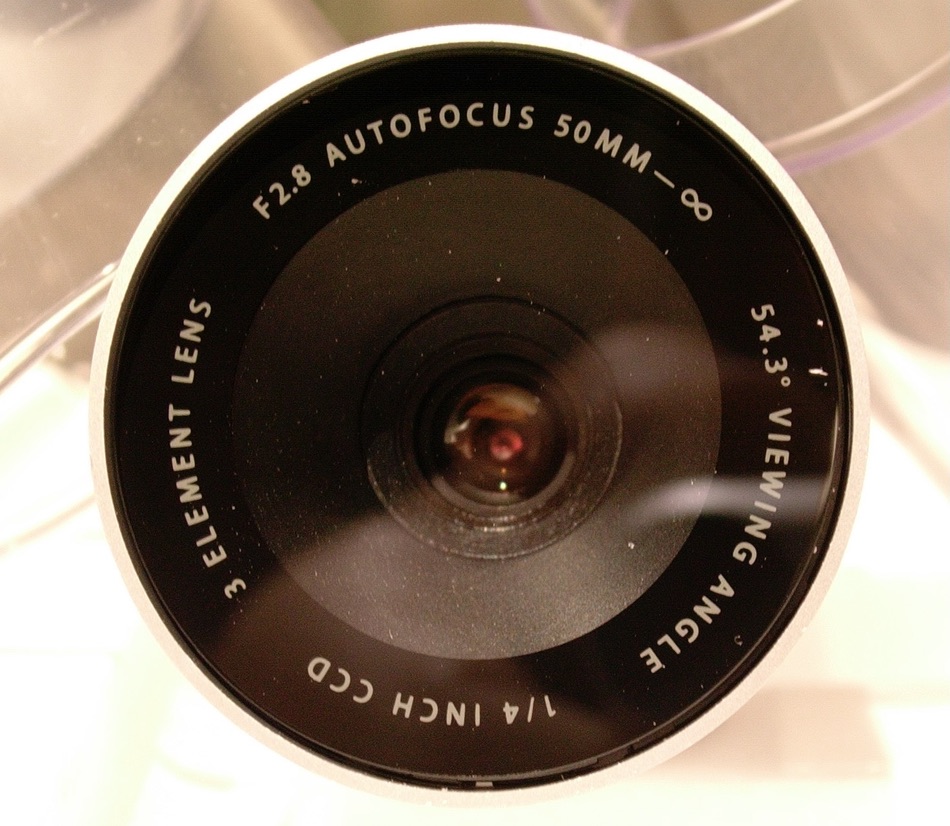
 First webcam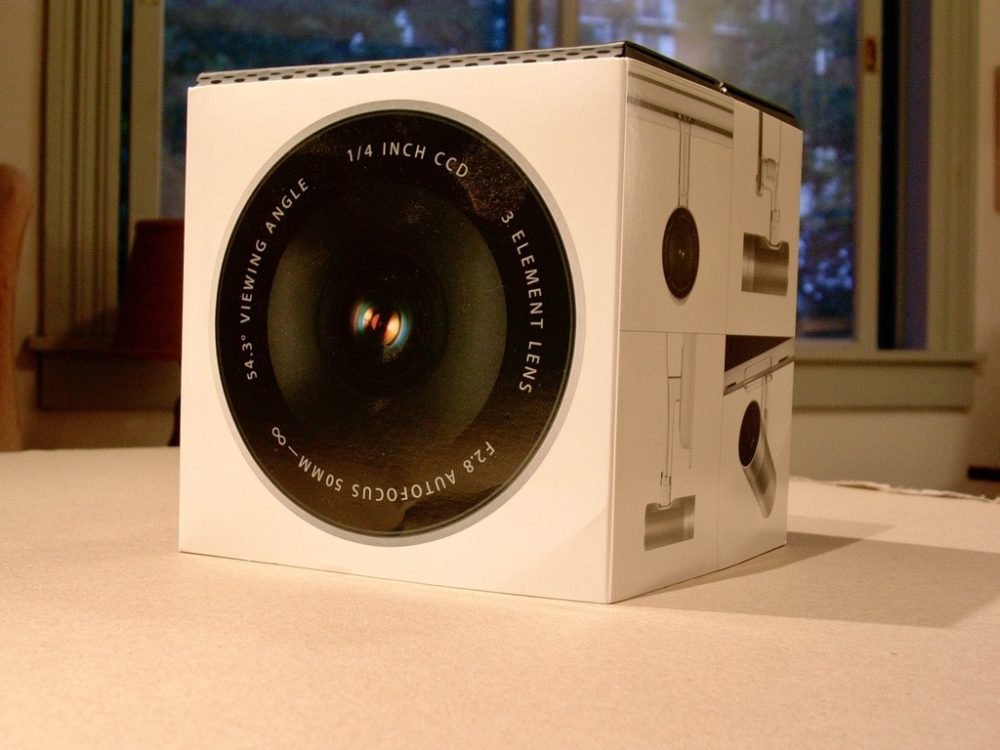


custom CD of Taj Mahal burned by Mr. Wonderful
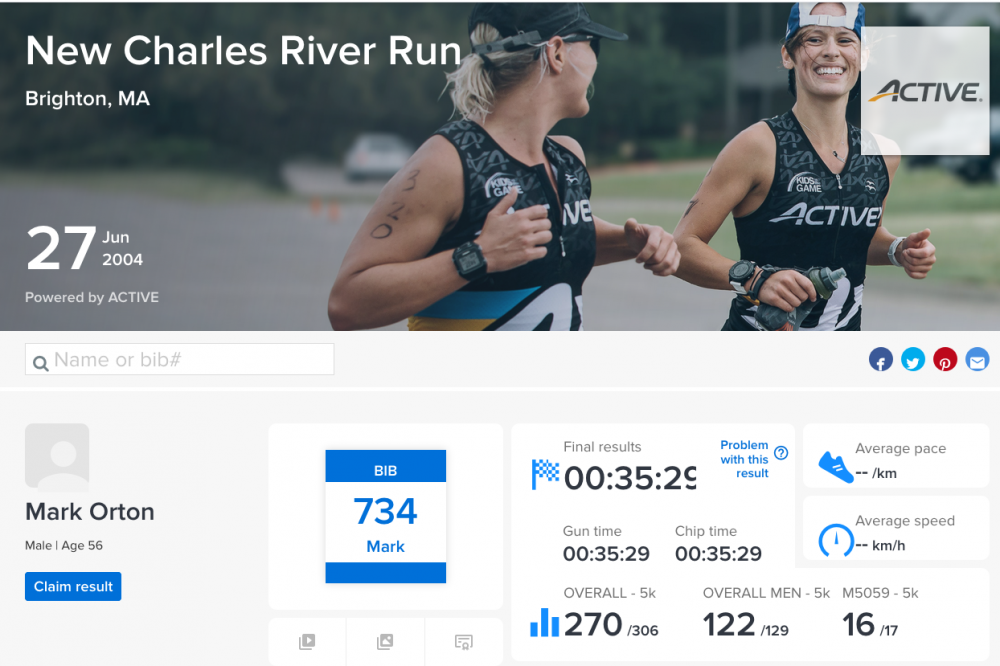
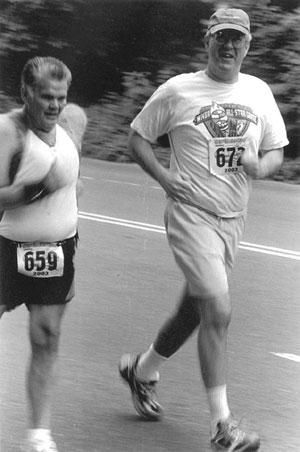 The New Charles River 5K and 5 mile race. The guy to my left appears to be running. In fact, he is a race walker. I kept pace with him for the first mile. By the three mile marker, I couldn’t see him. He finished 3 minutes ahead of me.
That’s me closing in on the finish line. A disappointing 37 minutes, barely under 12 minutes per mile pace.
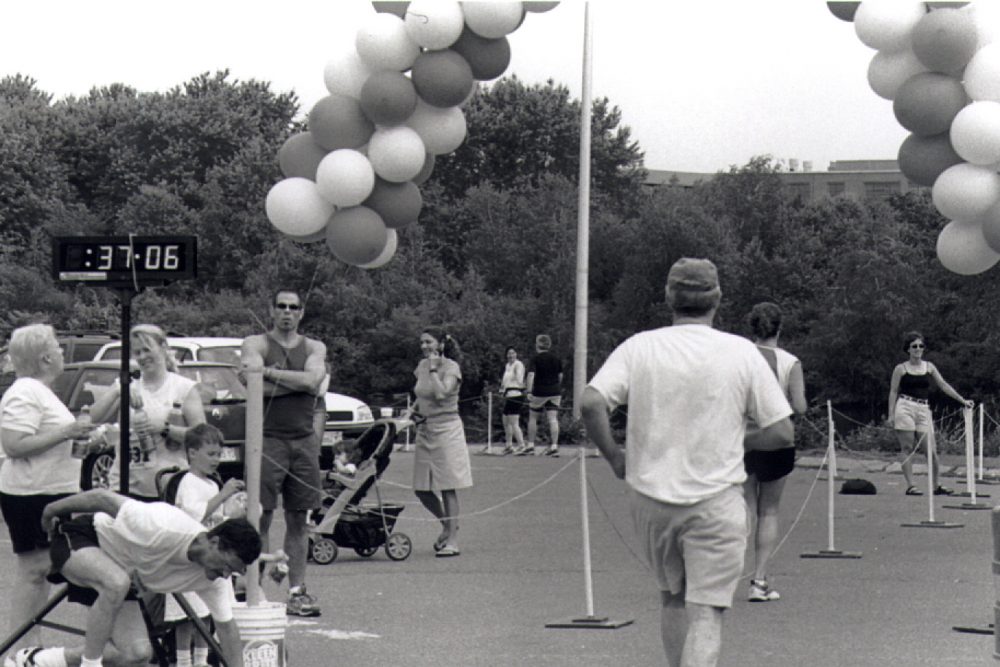
some pace!!
BTW: After the race was over, the race walker came over and we chatted. He had heart bypass surgery a year ago.
(Thanks for the photos to the official Mr. Wonderful Sports Photographer, Ms. Karen.)
We also went to a luncheon given by Hank and Flo Shulman in honor of the son Brian and new daughter-in-law Tracy.
Goldie Barman
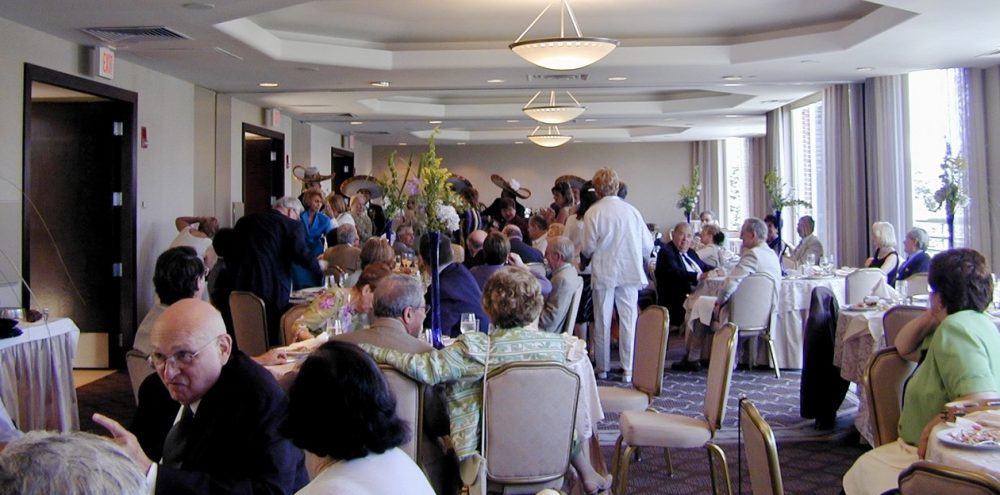
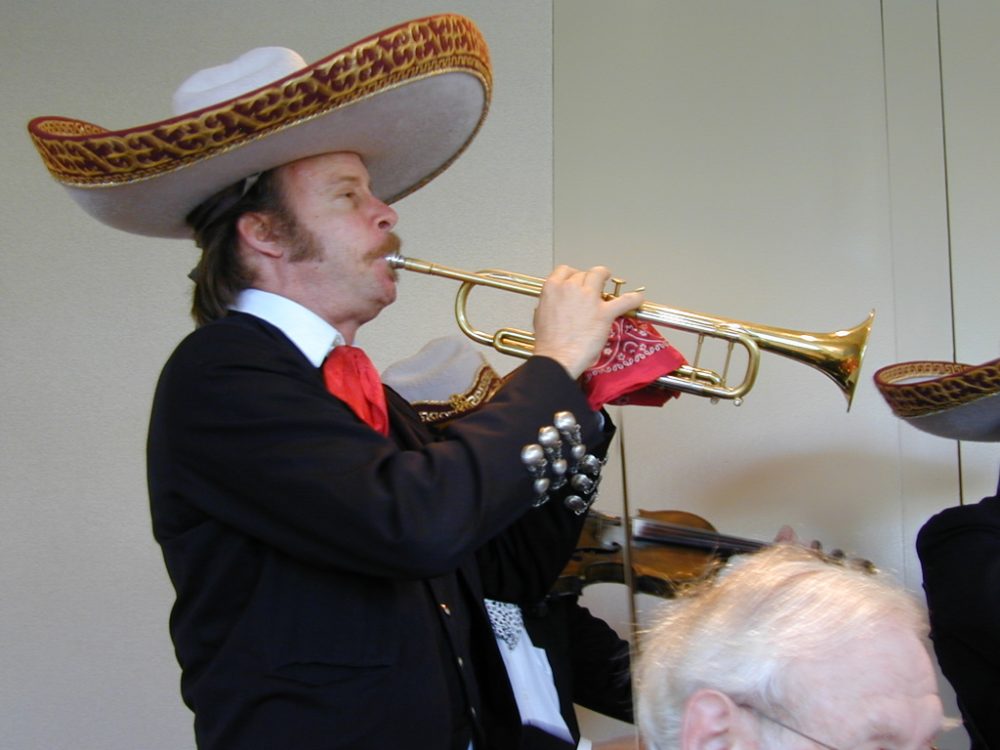

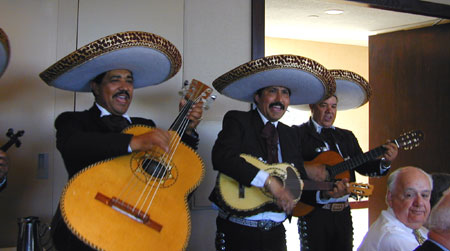
The Band.
We attended a wedding party for Kristen Graves (former tenant at 52 Kinnaird) and Lien Tung at their house in North Cambridge.
The New Charles River 5K and 5 mile race.
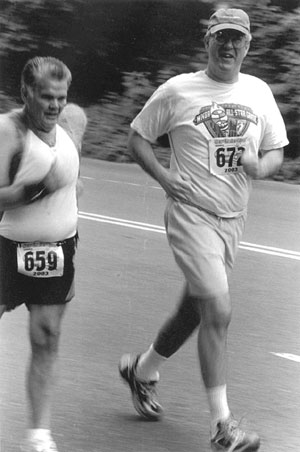 The guy to my left appears to be running. In fact, he is a race walker. I kept pace with him for the first mile. By the three mile marker, I couldn’t see him. He finished 3 minutes ahead of me across the finish line.
That’s me closing in on the finish line [the finish line photo was in an old now defunct format – so lost]. A disappointing 37 minutes, barely under 12 minutes per mile pace.
BTW: After the race was over, the race walker came over and we chatted. He had heart bypass surgery a year ago.
(Thanks for the photos to the official Mr. Wonderful Sports Photographer, Ms. Karen.)
>We also went to a luncheon given by Hank and Flo Shulman in honor of the son Brian and new daughter-in-law Tracy.
Goldie Barman
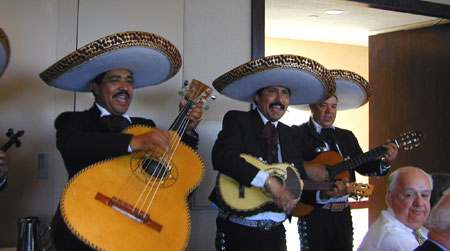
Mariachi Band
Boston Harbor Cruise sponsored by the Cambridge police department for the Riverside and Cambridgeport neighborhoods.
Talked with Anne Williamson, a neighbor and compatriot from the old RCCC days and other community matters.

Went to see Dr. Jim Umlas today. Looks like I have some floaters. To my surprise he found floaters that i had not noticed in my left eye as well as the new one in my right
“FLOATERS
Seeing floaters (spots) before one or both eyes is a frequent adult complaint. Floaters are usually most noticeable against a white homogeneous background and seem to move slowly when the eye is still. Floaters maintain their relative position in the visual field with eye movement. They result from contraction of the vitreous gel and its separation from the surface of the retina (posterior vitreous detachment). This leads to macroscopic opaque aggregates of vitreous fibers, which can be seen floating in the vitreous. Since the vitreous gel is denser where it attaches to the optic nerve, floaters are usually more apparent in this area. Although floaters usually are without significance, in a few patients they may indicate a tear in the retina. They are more prevalent in highly myopic and older persons and tend to become less noticeable with time.”
from THE MERCK MANUAL, Sec. 8, Ch. 90, Approach To The Patient With Eye Disease
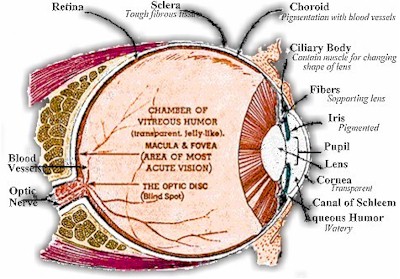
image borrowed without permission from www.lensconsultants.com/_images_us/020602.jpg information downloaded Tuesday, July 22, 2003 9:25:24
Trip to NYC for a long Fourth of July Weekend
We left Cambridge by 8:30 or so and arrived in NYC, the Chelsea neighborhood first, in time for lunch at a tavern’s noisy back yard. All was ok because I took my bowl of chili with Guiness.
We stopped at a number of galleries, but we found our return to InCamera to be the most rewarding.
InCamera Gallery
511 West 25th Street, Suite 401
New York, New York 10001
Phone: 212 647 766
The current exhibition is a group show. One of the owners of InCamera, David Monaco, took an inordinate amount of time showing us lots of photos in his portfolio of artists.
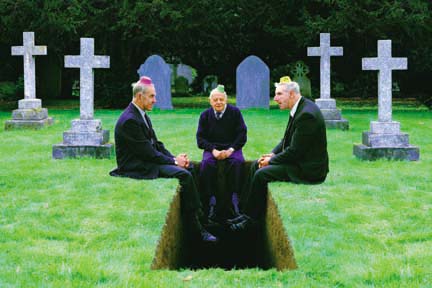
photo above by David Stewart – From the Fogeys series
We visited with the New York crowd, Andrea, John, Noah, Nyla and the extended family (more on them below).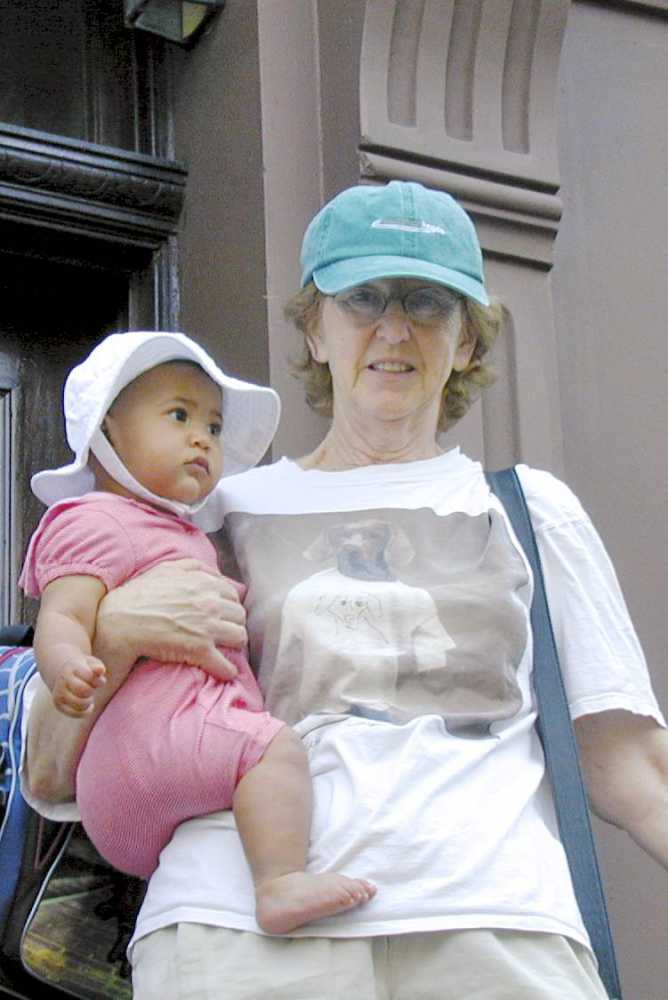
We went to a pool party at John and Jeanette’s (147th St & Malcolm X Blvd). Little did we know that these are real partying pros.
Karen bouncing Nyla
Noah

Nyla
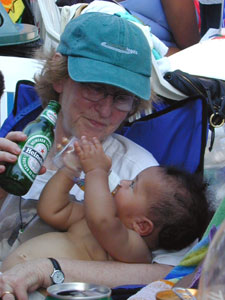
Karen with Nyla
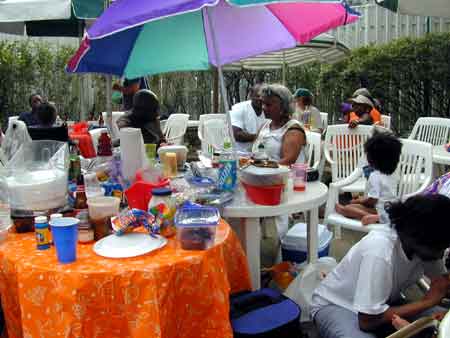
By the time a couple of hours had passed, we had enlarged our territory to four table from our original two. And, we were still there until the clean up crew began to sweep us towards the gates. 
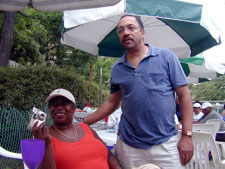

On Friday and Saturday mornings, I took advantage of the running path around the Reservoir in Central Park. Nice packed dirt surface. Most everyone runs in the same direction around the 1.6 mile circumference.
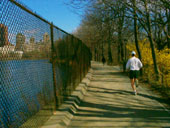
(picture appropriated from http://www.centralpark2000.com/touring/runners_bikers_skaters/reservoir_tracks.htm)
(After my run Friday morning, I found our way north through the park, skirting the tennis courts and stumbling through a ravine and under two bridges of very different construction to the Harlem Meer and the edge of the park. A mini-adventure.)
No trip to the city would be considered without visits to museums.
We spent part of Saturday at the Whitney Museum of American Art and the Cooper-Hewitt, National Design Museum
Karen found the National Design Triennial stimulating.
At the Whitney, we focused on three exhibits:
Pictures from Within: American Photographs, 1958–2003;
The American Effect;
and Elie Nadelman: Sculptor of Modern Life
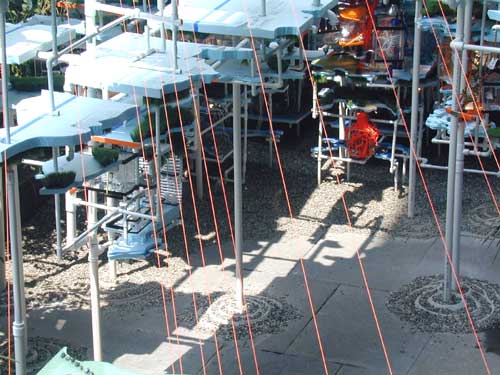
Sarah Sze’s “The Triple Point of Water” in the courtyard at the Whitney
The American Effect is a large show of artwork from around the world that focuses on reflections, influences, and commentary on America. Only a few pieces really revealed how engrained American images and ideas are throughout the world. Most of the work was much more straightforward commentary. An interesting phenomenon in the exhibition is the presence of so much video/computer-based art. I found this off-putting because I was not mentally prepared to put on headphones and settle down for a while to see a video or interact with a computer. Thus an awful lot of the exhibition was missed by me.
Here is friend Linda at her new Apple eMac.
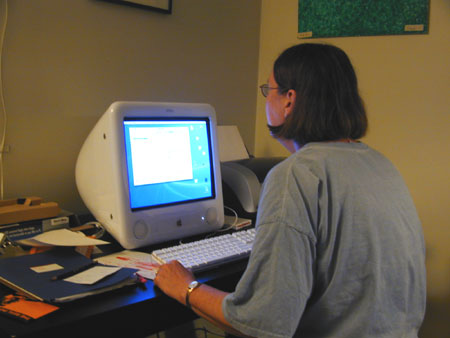
More lessons about surfing the web to follow.
After many year’s of using old machines and suffering the breakdowns, this is her first brand-new, out-if-the-box computer.
 Karen’s birthday – after the party
A favorite with Law & Order

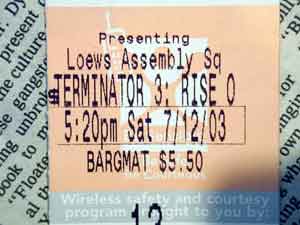
Arnold returns!
A smoke stop in one of my favorite parks in Cambridge, Cpl Burns on Flagg St.
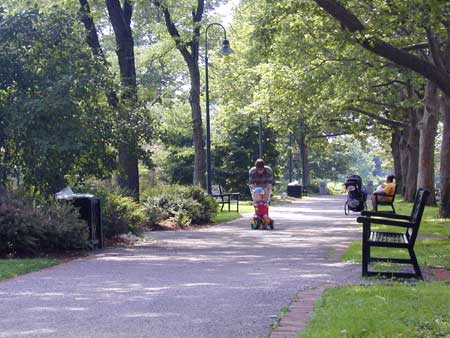
What is not visible here?
To the left of the path at rear of picture, two basketball courts where some of the best round ball around is played. On the right of the path at rear of picture, several panel trucks and a couple of SUVs with noisy rap music and people hanging out. To the left at about where the father is helping the tricyclist, is a street hockey court. To the immediate left, is a large playground with a couple of water spritzers and little children screaming as they run through the water sprays.
I walk up this path from the river after each run along the Charles. I enjoy it every time.
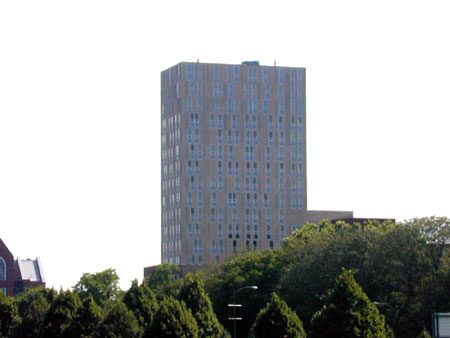
Harvard is finishing up new student housing across the river at Western Ave. I have been troubled from the beginning and now as it comes to completion i am struggling to find good things to say. I will return later with a little photo essay and you can decide for yourself.
A visit to Dr. Wolpow, neurologist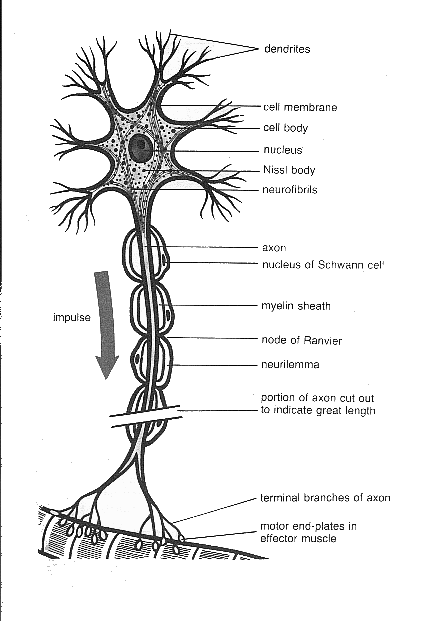 .
.
I paid a visit to my neurologist today. He gave me a little lecture about how we lack appropriate mental models for the pace and process of peripheral nervous system repairs. He said the good news is that the nerves damaged in the Lyme attack two years ago are alive, but that recovery could take 2 to 3 more years assuming that recovery continues…. so I guess I have to keep my consumption of Scotch dwon to once a week. As Mother used to say in such states, “What a bore!”.
Construction at 217 Western Ave continues. Controversy over disruption of neighbors side yard seem to be resolved with new fence and promises of landscaping when the project is finished.
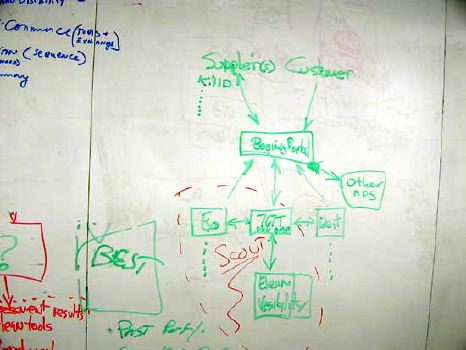
Work on a proposal with Boeing.
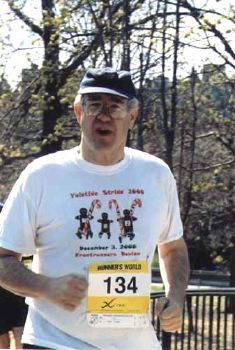
I ran a 5K race along the Charles, The First Annual Asthma Fund Raiser at MGH, part of World Asthma Day. Here I am in the T-shirt from the last race (December 3, 2000) I ran in before the Lyme plague. Finished this one in 36’20”. Slow (targeted 33′ 30″) but Felt Great!!


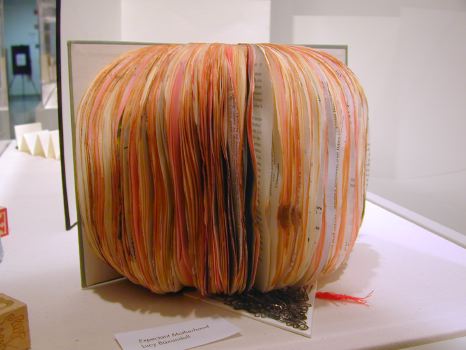
in the reading pile.
12 inch baseboard in 1840s house Jaffrey NH during visit with Bonnie Mitchell and Martin.
Ready for the day’s activities – computer and gym bag
The end of the Pamela Worden project. 50 copies of “Letters To Andrew: the house book” Flash movie.

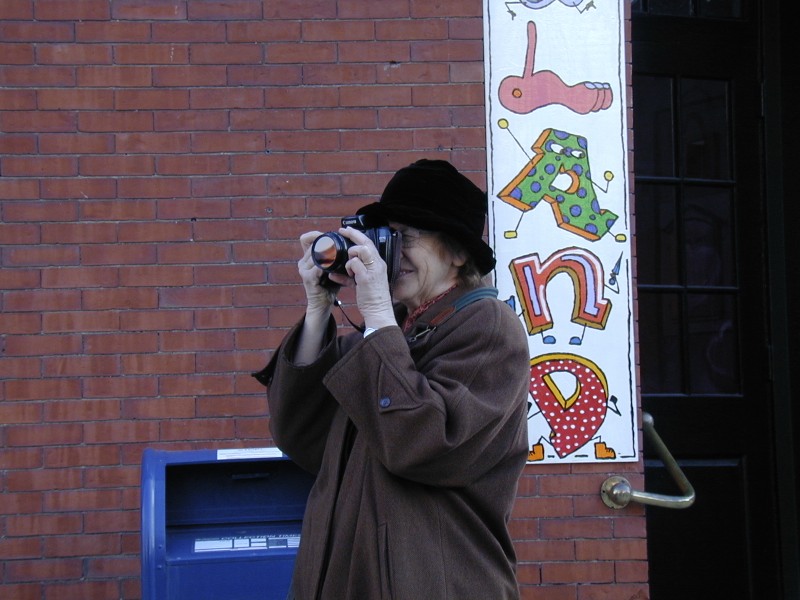
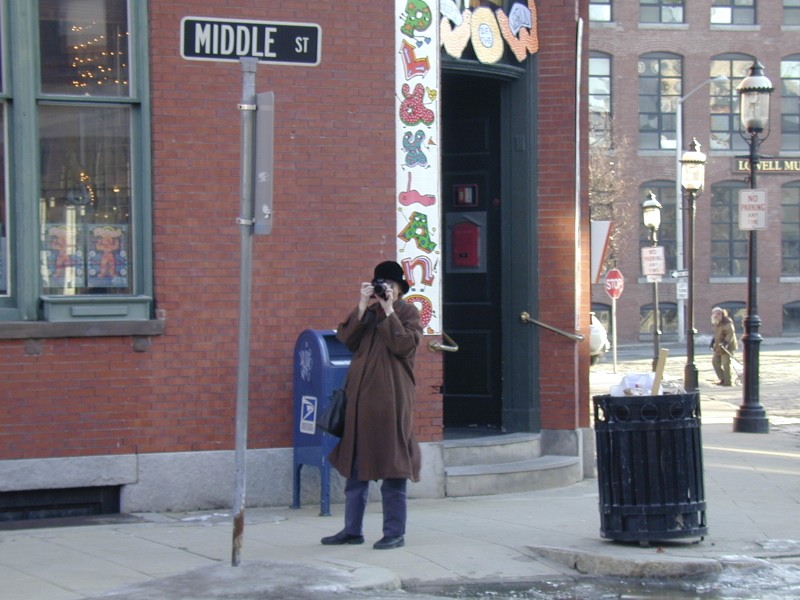
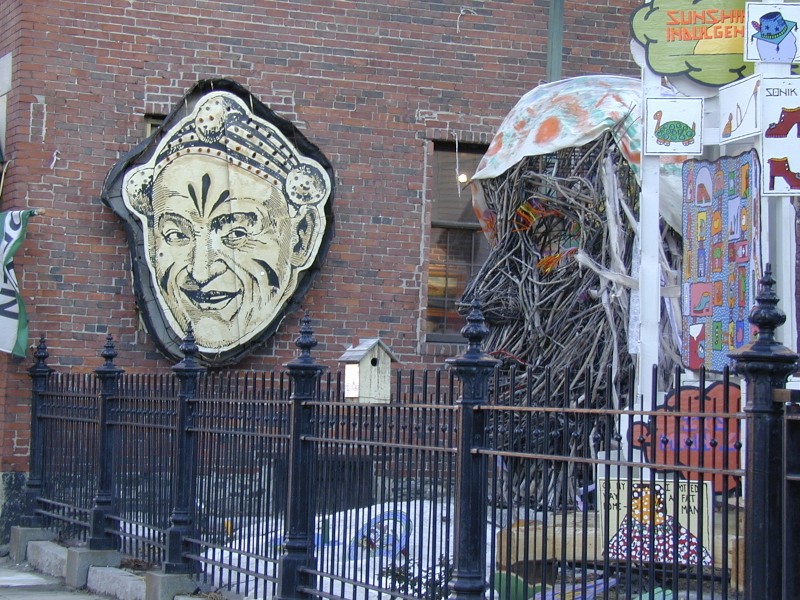
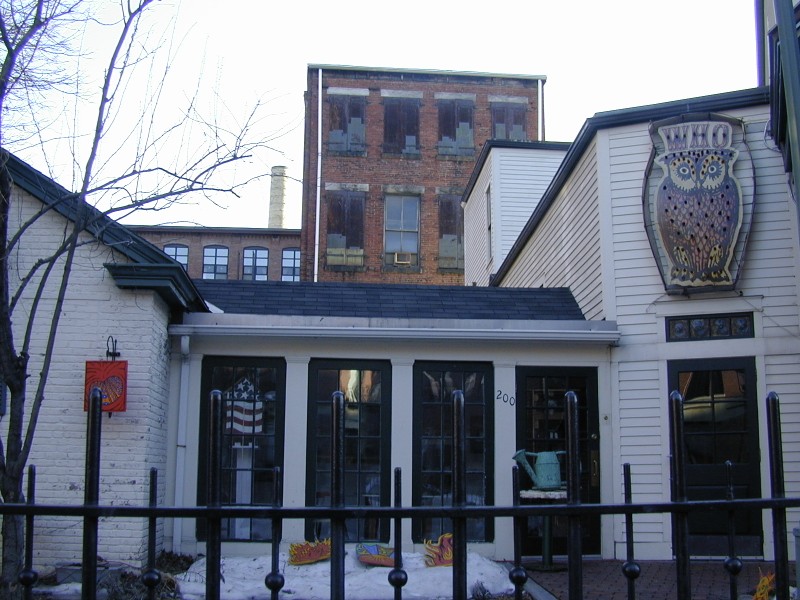
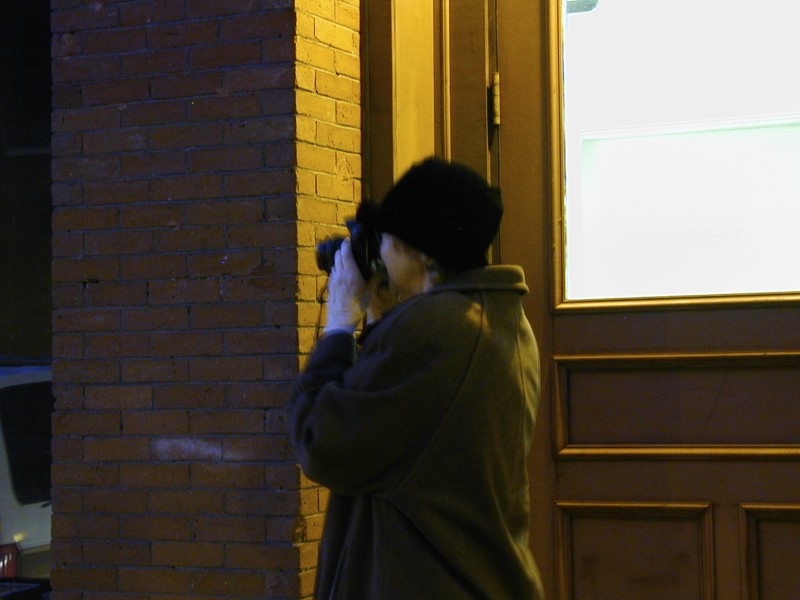
Karen is ready to go.
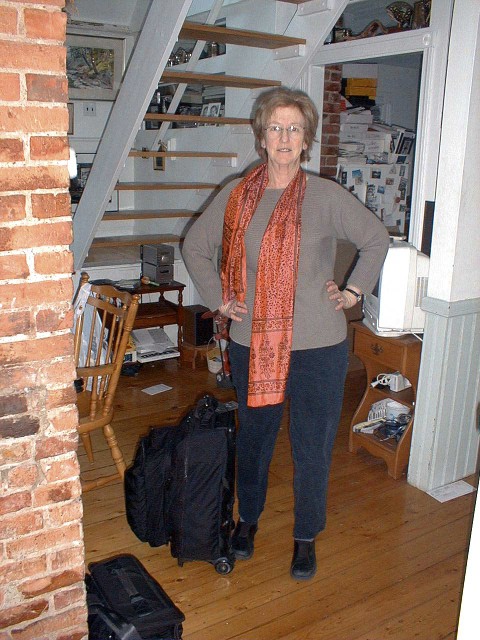
Karen is ready to visit Cheryl in Palo Alto, CA.
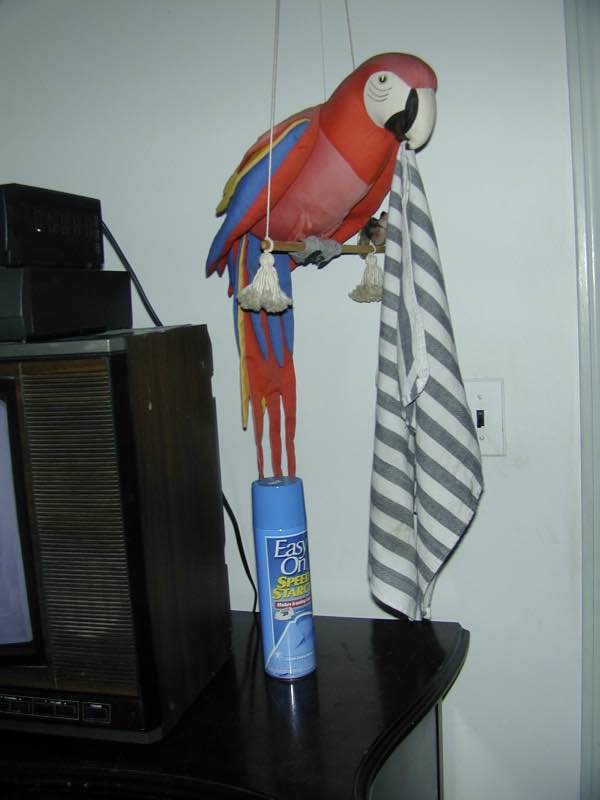
Some wit …..
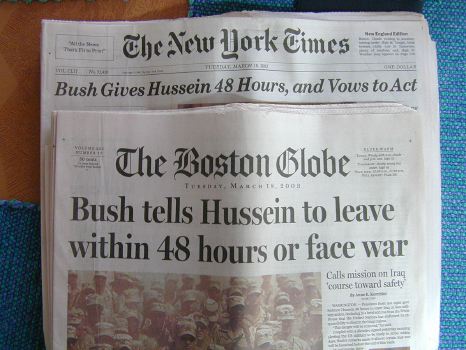
Bush announces more steps in his war.
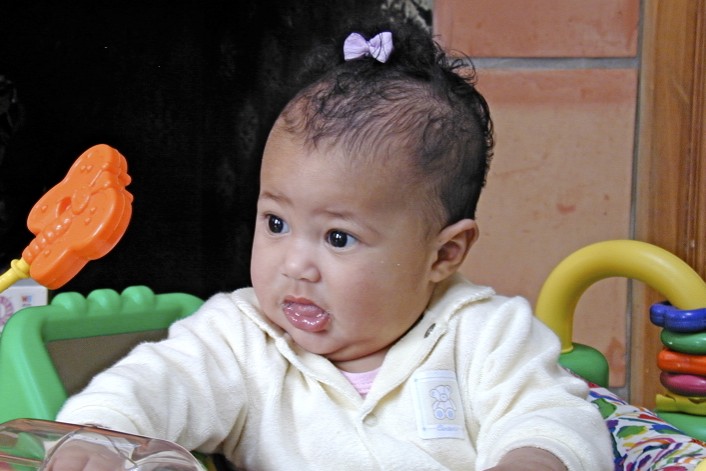
Nyla

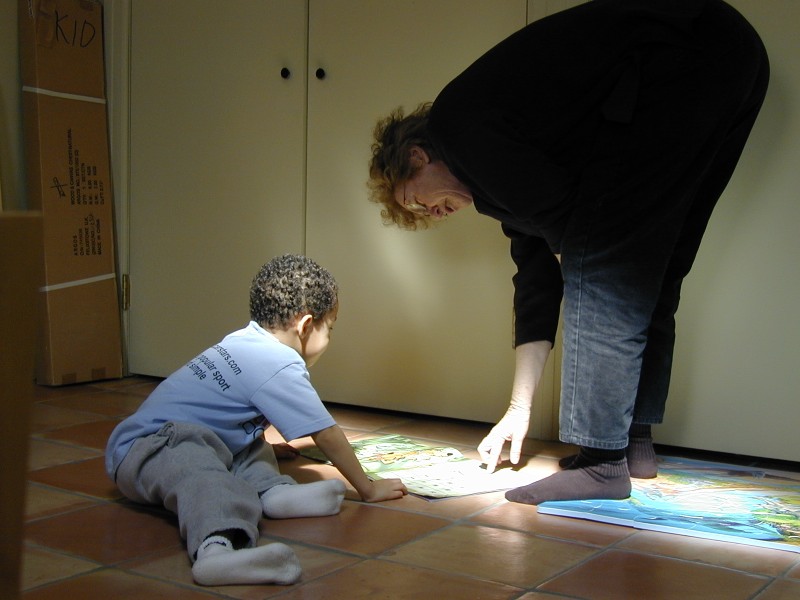
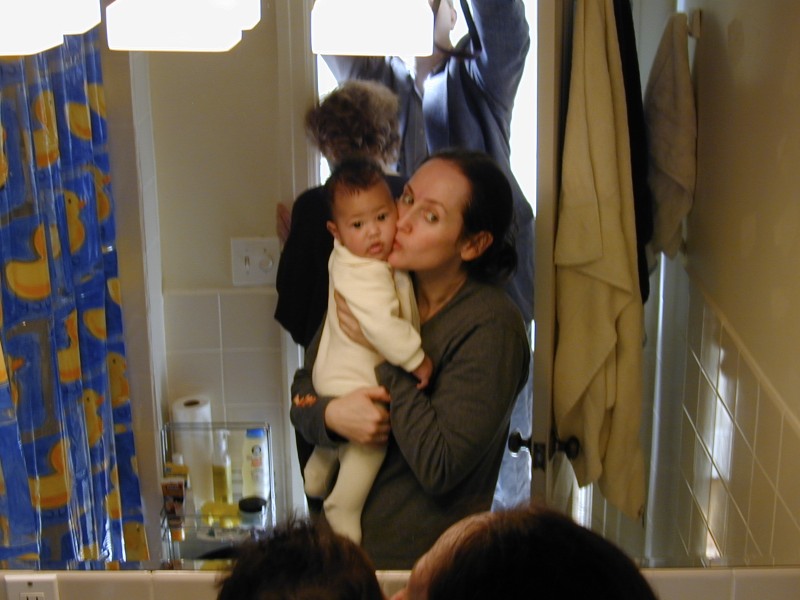

Jim and Judy, our backyard Franklin St. neighbors are convinced that Spring is here. So am I, after my first outside run along the river since late October.
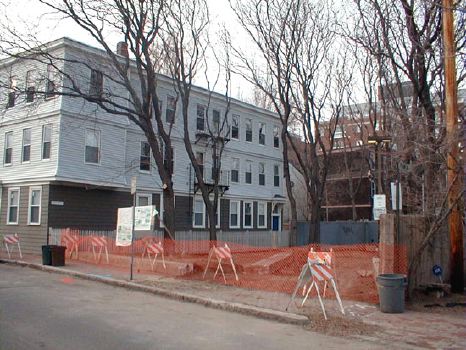
Reconstruction has actually begun on this vest-pocket park on Franklin St. The original concrete monstrosity was built in the 60’s during the same architectural phase that brought us the King and Tobin elementary schools in the “brutalist” style most famously seen in Boston City Hall and the nearby state mental health building.

Construction – Franklin St pocket park

More expensive housing being built on Franklin St. The lot was formerly the site on an automotive repair garage.
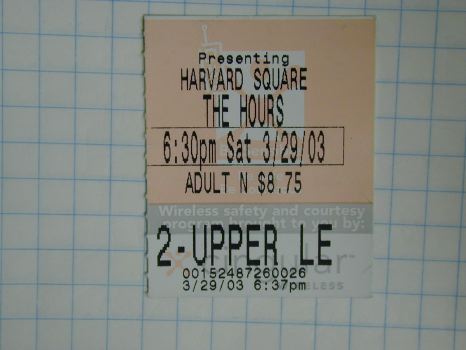
“Hours”, very good, especially surprising Meryl Streep who really is some else, not Meryl Streep working very hard at acting. Also Nicole Kidman and Julianne Moore in outstanding performances.