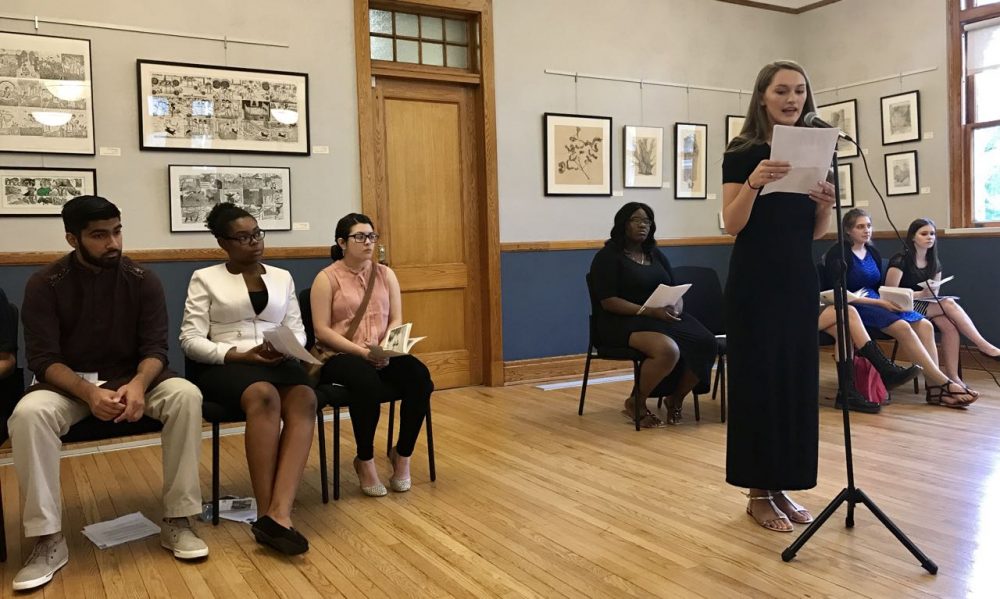
Students presenting their work at HAL.
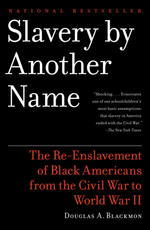
It is doubtless a fact that most Northerners, including the writer, think that slavery in America was a Southern problem. In the North slavery was an occasional institution, or so we think.
A week ago on Thursday 6/8/17 I attended a program at the library, “Abolition and Women’s Rights in Local History” presented by the students of Hudson Community Schools’ Writing Center at the Hudson High School. More about this project here.
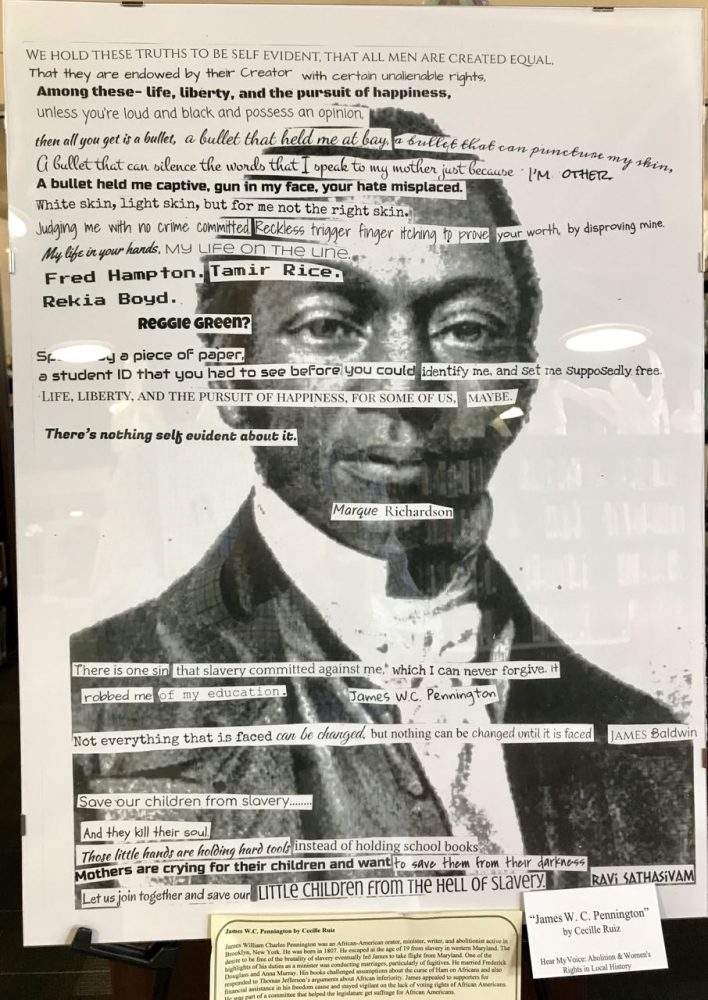
“James W. C. Pennington” by Cecille Ruiz – click to see full size image
The bulk of the program revolved around presentations by the students of their research and creative projects about slavery, abolitionists and women’s rights activists of the 1830s-1850s in upstate NY. The word and image projects are on display in the library now.
Slavery in Hudson and Columbia County
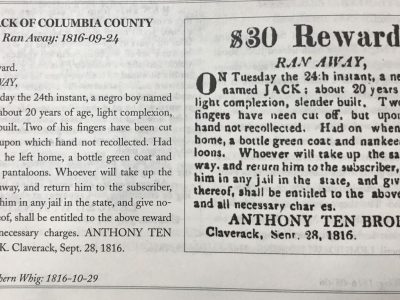
But, I want to focus on just one aspect here. The program opened with readings of notices of runaways slaves from the Hudson River Valley. Many were notices from slave owners in Hudson and Columbia County dating roughly from 1795 to 1840. 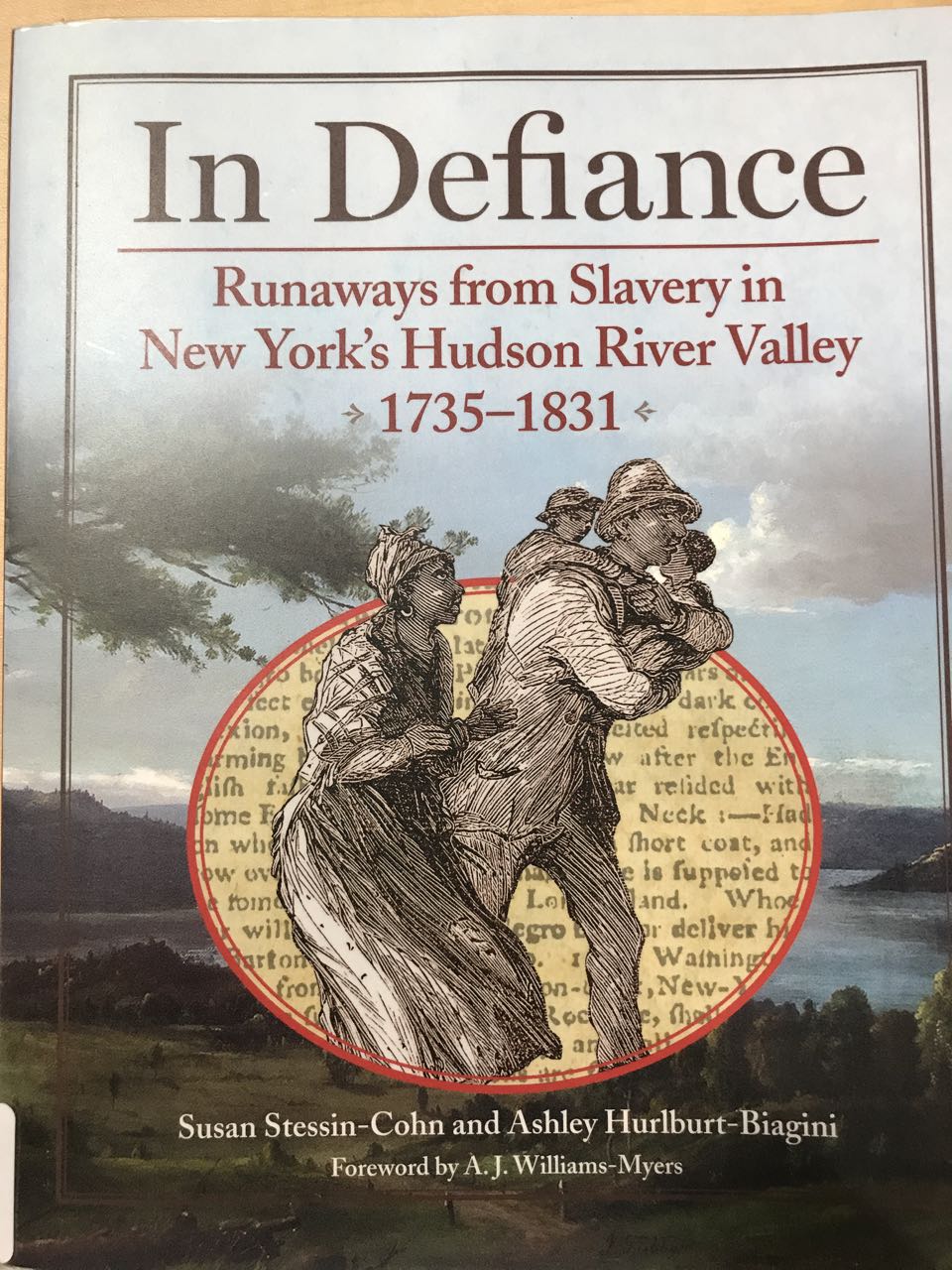 The source of these notices is In Defiance: runaways from slavery in New York’s Hudson River Valley, 1735-1831 ((Stessin-Cohn, Susan, and Ashley Hurlburt-Biagini. In Defiance: Runaways from Slavery in New York’s Hudson River Valley, 1735-1831, 2016.)) It is available in the library.
One hint about the deep history of slavery in our region is the fact that over 50% of the runaways spoke both Dutch and English. ((p324. Stessin-Cohn, Susan, and Ashley Hurlburt-Biagini. In Defiance: Runaways from Slavery in New York’s Hudson River Valley, 1735-1831, 2016.)) This is clearly an indication that they lived here long enough to learn two languages.
Here are a few samples from the book: (click on images for full size)




 Went to gym, then breakfast at Bob’s diner. Conversation about free markets and how best to present ideas about how ideas about them permeate the culture.
 Reading
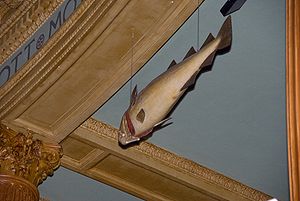
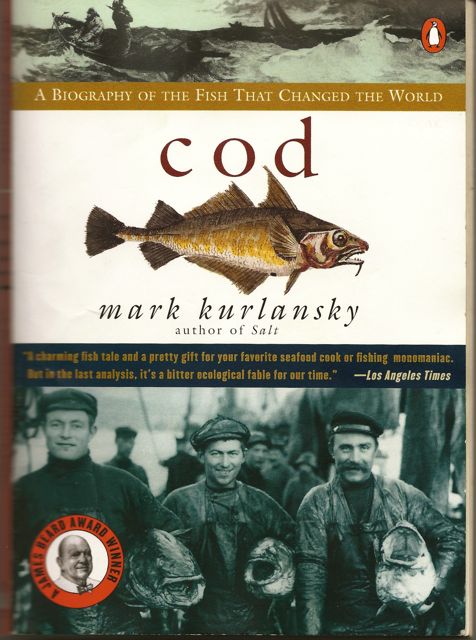 This wonderful little book (283 pages including 40 pages of recipes) by Mark Kurlansky is a great introduction to viewing history through a different kind of lens. We are all to used to history as told from the point of view of great men (almost always me) and nation states. Codis about the fish, fishing, processed food, ecology, trade, slavery, rum, fishing technologies, food around the whole of the Atlantic and beyond and more. It is a wonderful example of regional history.